

The best entrepreneur forums for a Christian man carrying real weight in his business are not forums at all. They are paid, small-group masterminds like Isibrotherhood's Personal Boards of Advisors, where five or six men meet regularly to speak into your personal life, spiritual life, relationships, career, and finances with actual accountability attached.
You already know the difference between advice and accountability. A comment thread gives you the first. A Personal Board of Advisors gives you the second, and it does it by pairing biblical formation with measurable business and kingdom metrics instead of anonymous opinions from strangers who never see whether you followed through.
If you are ready to move, here is the shortest path:
- Schedule a discovery call with Isibrotherhood to hear how a Personal Board of Advisors works.
- Sit in on a trial or intro session before committing to anything.
- Apply, get placed with a group that fits your season, and start showing up weekly.
Pro Tip: Bring one real, current struggle to your discovery call, whether it is a cash flow problem or a marriage strain. How the facilitator responds tells you more than any sales page will.
Christian entrepreneur coaching programs work best when they pair Scripture with business fundamentals and set measurable goals for both spiritual maturity and business outcomes. That combination, not motivational content, is what separates a real mastermind from a message board with better branding.
Table of Contents
- How Do You Choose the Right Faith-Based Mastermind?
- What Does a Quality Christian Men's Mastermind Actually Look Like?
- How Do You Measure Success Beyond the Balance Sheet?
- How Iron Sharpens Iron (ISI) Structures Its Masterminds
- Why ISI Endorses the Personal Board of Advisors Model
- Ready to Apply? Here Is How Joining ISI Works
- Key Takeaways for Joining a Faith-Based Mastermind
- Sources
How Do You Choose the Right Faith-Based Mastermind?
Picking a group is not about finding the biggest name. It is about matching a handful of hard criteria to your actual season of life and business.
Fit and stage matter first. A launch-phase founder and a twenty-year business owner need different rooms. Short, intensive cohorts tend to serve launch phases well, while longer mentoring relationships of six to twelve months or more support growth and scaling seasons that require more systems work and bigger investment.
Facilitator evaluation comes second, and it is the one most men skip. Ask directly about the facilitator's own fruit, not their résumé. Coaches who take this seriously evaluate potential facilitators on proven integrity, transparent pricing, and a clearly stated theological perspective, and a quality mastermind will show you metrics that balance revenue goals with kingdom impact rather than revenue alone.
Accountability structure is the actual engine. Faith-based masterminds solve two problems most Christian business owners quietly carry: isolation and a lack of real accountability. A hot seat format, peer accountability between meetings, and follow-through on assigned action items are what convert a good conversation into changed behavior.
Before you sign anything, run this practical checklist:
- Ask for a sample agenda from an actual recent meeting, not a marketing mockup.
- Request an anonymized member roster profile so you know who you would be sitting with.
- Ask to shadow or trial one session before paying full membership.
- Get pricing, retreat costs, and exit terms in writing, not verbally.
Pro Tip: If a facilitator cannot produce a sample agenda within a day of asking, that delay is your answer.
Watch for red flags: vague or evasive theology, pricing that changes depending on who is asking, no willingness to show a sample agenda, sessions that run as one-way monologues instead of peer dialogue, and an inability or unwillingness to connect you with a current member for a reference.
What Does a Quality Christian Men's Mastermind Actually Look Like?
Mastermind groups, at their core, are gatherings of motivated peers who meet on a regular schedule in a non-competitive setting to sharpen each other in business, life, ministry, and spirituality. That definition matters because it rules out passive content consumption. You are not there to watch a webinar.

Most quality Christian business group coaching follows a fairly consistent rhythm. Sessions typically run 60 to 90 minutes and happen weekly or bi-weekly, blending teaching, live problem-solving, coaching, prayer, and accountability into a single meeting rather than separating them into different programs.
A typical agenda inside a strong group moves through distinct phases:
Expect membership fees on a recurring basis, with separate costs for retreats or deeper immersion events layered on top. The investment buys you two categories of outcome: measurable business results like cash flow stability and customer retention, and kingdom metrics like consistency in spiritual disciplines and how you're stewarding the people who work for you.
Most groups today run meetings and community interaction through standard video conferencing tools plus a dedicated app or online community platform, so members can stay connected between sessions rather than waiting a full week to check in.
Pro Tip: If a program cannot tell you its typical meeting length and cadence before you join, you have no way to judge whether it fits your calendar. Get specifics before you get excited.
How Do You Measure Success Beyond the Balance Sheet?
Business metrics alone tell you if you're profitable. They tell you nothing about whether you're becoming the man, husband, or leader you're supposed to be. A serious mastermind tracks both.
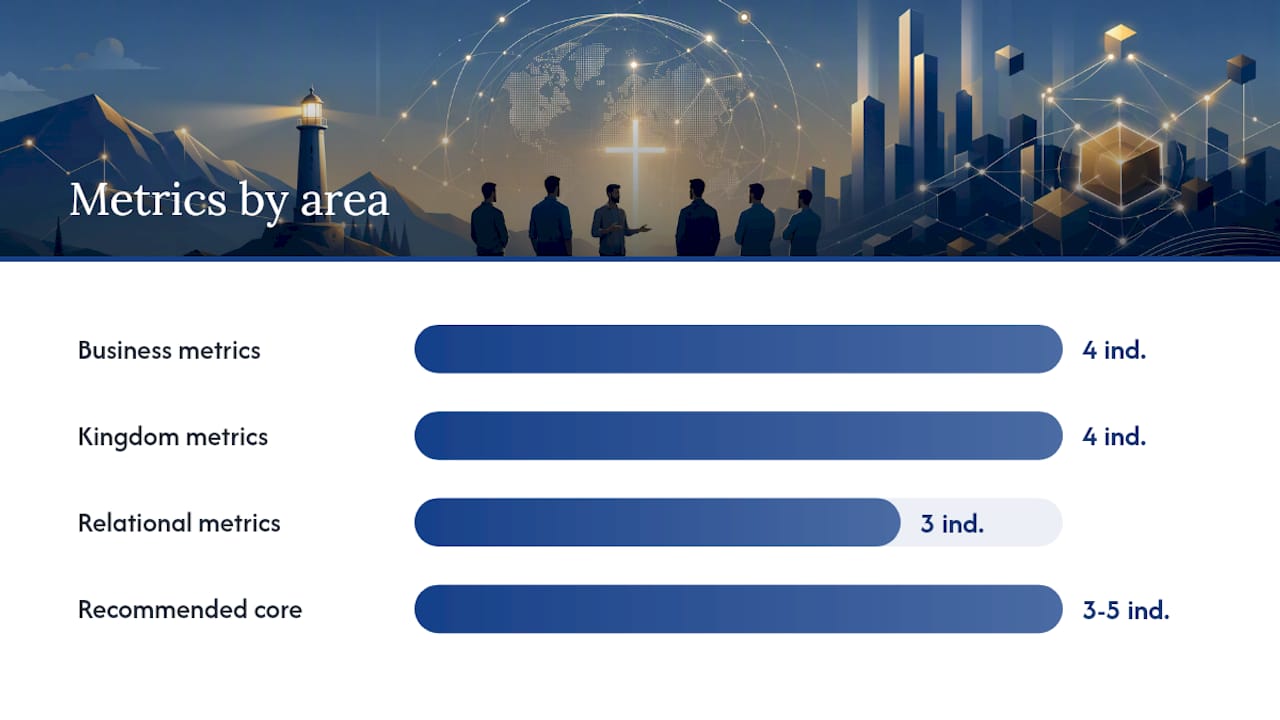
On the business side, track concrete numbers: cash flow trends, gross margin, customer retention rate, and time-to-profit on any new offer you launch. These are not soft goals. They are the same numbers any competent advisor would push you toward.
On the kingdom side, the metrics look different but are just as trackable. Consider:
- Frequency of personal spiritual disciplines like prayer and Scripture engagement.
- Concrete disciple-making activity, not just church attendance.
- Generosity as a percentage of income or time, tracked deliberately.
- Evidence of workplace witness, meaning how employees or clients experience your character.
Relational metrics round this out: how you're stewarding the people on your payroll, how often you're mentoring someone else, and whether you're actually engaged in your local community or just paying it lip service.
Groups that pair case studies with Scripture and set measurable goals for spiritual maturity alongside business outcomes give you a real framework instead of vague inspiration. Operationalize it with a monthly scorecard, reviewed inside the group, that checks each of these indicators.
Pro Tip: Pick three to five core indicators total, not fifteen. A scorecard nobody actually fills out is worse than no scorecard at all.
How Iron Sharpens Iron (ISI) Structures Its Masterminds
Isibrotherhood built its model around one structural decision: every man gets placed into a Personal Board of Advisors, a small, trusted group of Christian men who meet regularly to challenge, encourage, and hold each other accountable across personal, spiritual, relational, professional, and financial growth.
Membership includes weekly mastermind meetings inside your Personal Board of Advisors, a year-round online community that keeps conversations going between sessions, in-person leadership events and retreats, a member directory, app access, and curated teaching content including podcast episodes like the Fit Dad Nation conversation on building successful relationships and businesses.
Men who stay honest about what's actually happening in their business and their marriage, in the same room, tend to grow faster in both. That is the entire premise behind pairing personal and professional accountability instead of separating them.
ISI runs on a recurring paid membership model with tiered mastermind options, plus separate fees for retreats and deep-dive events. Expect a commitment horizon closer to six to twelve months rather than a one-off workshop, which matches how longer mentoring relationships support real growth rather than a quick fix.
Joining follows a clear sequence:
- Start with a discovery call to talk through your season and goals.
- Attend a trial or intro session with a group.
- Submit an application for placement.
- Complete onboarding and get matched to your Personal Board of Advisors.
- Begin scheduled meetings on a weekly rhythm.
Members share real reflections along the way, including stories like how others' lives are better as a result of knowing you, which gives you a sense of the relational depth these groups actually reach, beyond the business metrics.
For readers weighing this against a general coaching format, a comparison makes the distinction concrete:
| Factor | Open Networking Group | ISI Personal Board of Advisors |
|---|---|---|
| Group size | Large, often open enrollment | Small, five to six men |
| Meeting cadence | Irregular or monthly | Weekly, plus year-round community |
| Theological alignment | Rarely stated | Explicitly Christian, biblically grounded |
| Accountability structure | Minimal or optional | Structured hot seats and follow-through |
| Outcomes tracked | Business only, if at all | Business and kingdom metrics together |
Why ISI Endorses the Personal Board of Advisors Model
Biblical formation and practical leadership are not two separate tracks that happen to run parallel. They are the same track. A man who cannot manage his temper at home will eventually manage it poorly with employees too, and a man who treats Scripture as a Sunday activity will treat business ethics the same way, as optional under pressure.
Isibrotherhood exists because generic coaching separates those two things, and the separation fails men. Group coaching formats favor peer learning plus guided accountability, and that combination tends to fit business owners who need implementation support, not another strategy document. Members inside these groups typically report growth on both fronts at once: cleaner financial decisions and a steadier walk with God, because the same five or six men are watching both.
Inside ISI groups, expect a culture of directness balanced with grace. Men call out drift before it becomes a crisis, and they celebrate wins that would go unnoticed anywhere else. If that sounds like the room you have been missing, talk to a community representative and see for yourself.
Ready to Apply? Here Is How Joining ISI Works
Isibrotherhood is the direct alternative to scattered forum advice and one-off coaching calls: instead of piecing together fragments from strangers online, you get a standing group of vetted men who know your business and your family by name and meet with you every single week.
The path in is intentionally low-friction. You start with a discovery call, move into a trial or intro session so you can feel the room before committing, then submit your application, complete onboarding, and land in your first scheduled meeting within weeks, not months.
Your first ninety days typically include an onboarding checklist, two or three initial accountability goals set with your group, and the option to attend your first retreat, which is often where the deepest relational breakthroughs happen. Many members treat this stretch like a focused sprint, similar to the pacing described in the Court of the 12 Week Year, where short, intense implementation windows produce faster traction than a vague annual goal ever does.
Membership runs on tiered pricing with a recurring fee structure, plus separate costs for retreats and events, and investment ranges depend on which tier fits your stage. If you are ready to stop navigating business and faith as separate problems, schedule a discovery call and find out which Personal Board of Advisors fits your season.
Key Takeaways for Joining a Faith-Based Mastermind
A paid, small-group Christian mastermind outperforms open forums because it pairs weekly accountability with measurable business and kingdom metrics tracked by the same trusted group over time.
| Point | Details |
|---|---|
| Evaluate fit first | Match group size, business stage, and meeting cadence to your current season before applying. |
| Attend a trial session | Sit in on an actual meeting or discovery call before committing to any membership tier. |
| Commit to a real cycle | Plan for six to twelve months minimum, since lasting change rarely shows up in a single quarter. |
| Confirm trust signals | Verify facilitator fruit, transparent pricing, and a sample agenda before you pay anything. |
| Choose Isibrotherhood | ISI's Personal Boards of Advisors combine weekly accountability with tracked business and kingdom outcomes. |
Sources
For readers who want to verify the framework behind this guide or explore related tools, these resources go deeper on specific pieces.