

A CEO peer group is a small, confidential circle of non-competing executives who meet regularly to advise one another on real business challenges. If you are a CEO, founder, or senior executive wondering whether to join one, the short answer is yes — the isolation at the top is real, and structured peer accountability changes how you lead. For Christian men executives specifically, Isibrotherhood (Iron Sharpens Iron) is a recommended faith-aligned option that places every member into a personal board of advisors grounded in biblical wisdom.
Table of Contents
- What does a CEO peer advisory group actually look like?
- Which CEOs actually belong in a peer group?
- How are these groups structured, and what happens in a meeting?
- What do CEOs actually gain from joining a peer group?
- How do you choose the right CEO peer group for you?
- How do you find, apply to, or start a CEO peer group?
- What does membership typically cost, and how much time does it take?
- Is Isibrotherhood the right fit for you?
- Key Takeaways
- Isibrotherhood: a clear next step for Christian executives
- Further reading and sources
What does a CEO peer advisory group actually look like?
The formal term for these groups is Executive Peer Advisory Group, or EPAG. Research from the University of San Diego defines them as small, forum-based groups where CEOs meet periodically to solve business challenges, share best practices, and operate under strict confidentiality and non-compete rules. The forum itself is the core mechanism. Everything else — coaching, events, leadership development — builds around it.
A typical group runs 6–16 members, all from non-competing industries, led by a trained facilitator or chair. The facilitator does not consult or advise directly. Their job is to hold the process: keep discussions on track, protect confidentiality, and draw out the group's collective wisdom rather than impose their own.
What a sample monthly meeting looks like:
- Check-in (15 min): — Each member shares one personal and one professional update — brief, honest, unfiltered.
The non-compete rule is not optional. It protects candor. When no one in the room is a direct competitor, you can speak freely about pricing strategy, a difficult hire, or a board conflict without fear of the information leaving the room.
Which CEOs actually belong in a peer group?
Not every executive is ready for this kind of group, and joining too early wastes everyone's time. The leaders who get the most from a CEO peer group tend to share a few common traits.
Profiles that fit well:
- Founder-CEOs managing companies with at least a handful of employees and real operational complexity
- Private company CEOs navigating growth, succession, or a potential exit
- Family business leaders who lack a neutral sounding board outside the family
- Faith-minded executives who want accountability that spans business, family, and spiritual life
- Leaders facing a specific inflection point: scaling past a revenue ceiling, hiring a leadership team, or preparing for acquisition
Situations where peer groups help most:
- You are making decisions that no one in your organization can fully advise you on
- You feel the weight of leadership without a trusted peer to process it with
- Your business is growing faster than your leadership capacity
- You are considering a major strategic move and want unfiltered perspective from people who have been there
When to wait: If your company is pre-revenue or fewer than two or three employees, the conversations in most peer groups will not yet match your reality. Come back when the decisions feel heavier.
Research confirms that executives join primarily to remedy isolation and report that they plan to participate indefinitely once they see early returns. That long retention rate says something important: the value compounds over time.
How are these groups structured, and what happens in a meeting?
| Element | Typical Range |
|---|---|
| Group size | 6–16 members |
| Meeting frequency | Monthly (most common) |
| Meeting length | Half-day to full day |
| Format | Roundtable, hot seat, case study |
| Facilitator | Trained chair or certified coach |
| Confidentiality | Formal agreement, enforced by facilitator |
The facilitator's role deserves more attention than it usually gets. A skilled chair reads the room, manages dominant voices, and creates the psychological safety that makes the hot seat format work. Program structures from established peer-group providers show that facilitators are typically responsible for member recruitment, agenda design, and accountability follow-up between sessions — not just running the meeting itself.
Confidentiality is enforced through a formal agreement signed at onboarding. Most groups also prohibit members from soliciting one another's business or employees. These rules are not bureaucratic formalities. They are what makes honest conversation possible.
Pro Tip: In any trial or intro session, watch how the facilitator handles a moment of tension or a member who dominates. That single behavior tells you more about group culture than any sales conversation will.
What do CEOs actually gain from joining a peer group?
The benefits split into two categories: the ones you can measure and the ones that quietly reshape how you lead.
Core benefits members report:
- Faster, more confident decision-making because you have already stress-tested the choice with peers
- Reduced executive isolation — the loneliness at the top is not a cliché, and Forbes practitioners confirm that peer groups are one of the most effective antidotes
- Accountability that actually sticks — commitments made in front of peers carry more weight than private intentions
- Vicarious learning from other executives' mistakes before you make them yourself
- Leadership development that is applied, not theoretical
- A trusted network that grows in depth rather than breadth
The experiential outcomes are harder to quantify but often more transformative. Executives describe a shift in how they process hard decisions: slower, more deliberate, less reactive. That shift tends to show up in fewer costly mistakes and better team culture downstream.
Academic research on EPAGs identifies the small-group forum as the primary mechanism delivering this value. Events and coaching add to it, but the forum is where trust is built and where the real work happens.
A Forbes analysis of CEO networks notes that peer support groups combat executive loneliness while providing practical business help — and that the variety of formats (founder-focused, chair-led, faith-aligned) means the right model depends on what you most need: accountability, industry insight, or spiritual formation.
How do you choose the right CEO peer group for you?
The wrong group costs you time, money, and trust. The right one becomes one of the most valuable relationships in your professional life. Here is how to evaluate before you commit.
Evaluation criteria to weigh:
- Confidentiality: Is there a signed agreement? How is it enforced?
- Facilitator credentials: What is their training, tenure, and track record with groups?
- Member mix: Are industries genuinely non-competing? What is the revenue and company-size range?
- Meeting structure: Is there a consistent agenda, or does it drift?
- Cost and time: Does the fee reflect the facilitation quality and services included?
- Values alignment: Does the group's culture match how you want to lead?
Ten questions to ask during an inquiry or trial:
- What does a typical meeting agenda look like, start to finish?
- How do you handle a breach of confidentiality?
- What are the facilitator's credentials and how long have they led this group?
- What is the average member tenure?
- What is the attrition rate over the past two years?
- Can I speak with two or three current members before joining?
- How are new members vetted for fit?
- What happens if a member's industry overlaps with mine after they join?
- Are there additional costs beyond the membership fee (retreats, events)?
- What does success look like for a member in their first year?
Red flags worth walking away from: a facilitator who talks more than the members, a group that skips the non-compete vetting, pressure to sign quickly, and vague answers about confidentiality enforcement.
Comparative guides show that pricing varies significantly across formats — chair-led networks, founder-focused groups, and faith-aligned communities each carry different cost structures. Higher fees generally reflect more intensive facilitation, smaller group sizes, and more frequent touchpoints. That correlation is not universal, but it holds often enough to use as a starting filter.
How do you find, apply to, or start a CEO peer group?
Steps to join an existing group:
- Research: — Identify two or three groups whose model, values, and member profile match your situation.
What to expect in the timeline: Most groups move from inquiry to membership in two to six weeks. Some have waitlists, particularly for specific industries or geographies.
If no existing group fits, starting your own is a real option. A functional founder group needs:
What does membership typically cost, and how much time does it take?
Membership fees vary widely depending on the organization, facilitation model, and services included.
Typical cost ranges:
- Entry-level or peer-run groups: often low or no cost beyond event fees
- Chair-led professional networks: commonly in the range of several hundred to a few thousand dollars per month
- Premium or highly facilitated programs: annual fees can reach five figures or more, particularly when one-on-one coaching and retreats are included
- Retreat or deep-dive events: typically billed separately, ranging from a few hundred to several thousand dollars per event
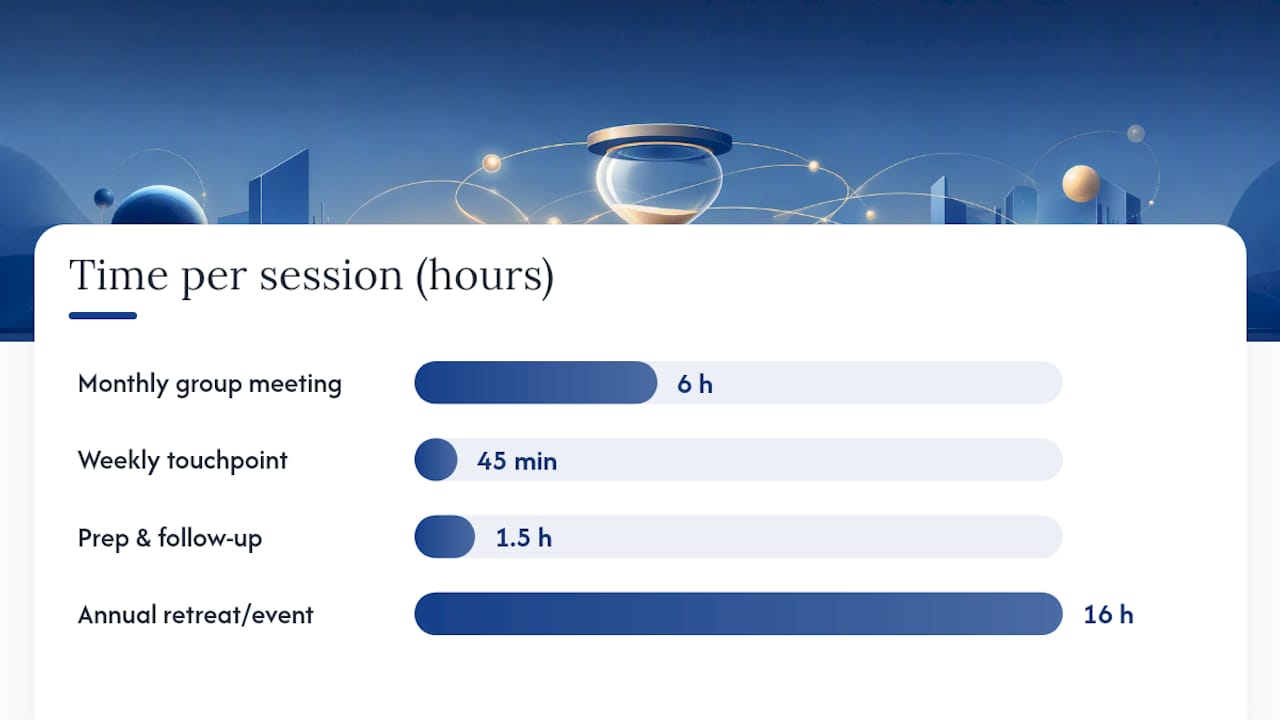
Time commitment breakdown:
- Monthly group meetings: typically a half-day to full day per month
- Weekly touchpoints or accountability check-ins: 30–60 minutes per week in some formats
- Annual retreats or leadership events: one to three days per year
- Prep and follow-up: 1–2 hours per meeting to review materials and act on commitments
The time investment is real. Most CEOs who stay long-term describe it as one of the highest-return uses of their calendar — not because the meetings are easy, but because the accountability and perspective they generate save far more time than they consume.
Benchmarking resources confirm that pricing across major peer-group formats reflects significant variation in facilitation intensity and group services. The question is not whether you can afford it. For most CEOs, the question is whether you can afford the cost of making major decisions without it.
Is Isibrotherhood the right fit for you?
For Christian men executives, Isibrotherhood (Iron Sharpens Iron) offers something most peer groups do not: a framework that holds your faith, family, business, and personal life in the same conversation.
Every Isibrotherhood member is placed into a small mastermind cohort — a personal board of advisors made up of Christian men who meet weekly. The structure covers five areas of life: personal, spiritual, relational, professional, and financial. That breadth is intentional. The premise is that a CEO who is winning at work but losing at home or drifting spiritually is not actually leading well.
Beyond the weekly mastermind, membership includes a year-round online community, virtual and in-person leadership events, a member directory, and access to the ISI Brotherhood Foundation. The 12-week structured accountability model gives members a concrete framework for executing on commitments between meetings.
Isibrotherhood is likely the right fit if you:
- Are a Christian man in business — owner, executive, entrepreneur, or professional
- Want peer accountability that integrates your faith with your leadership
- Are looking for a group that goes deeper than business metrics
- Value biblical wisdom as a framework for decision-making
- Want a community, not just a monthly meeting
To explore membership, visit isibrotherhood.com and start the application process. The onboarding is designed to find the right cohort for your stage of life and business.
Key Takeaways
The most effective CEO peer group combines a trained facilitator, strict confidentiality, non-competing members, and a consistent meeting structure — and the right group for a faith-minded executive integrates spiritual accountability alongside business performance.
| Point | Details |
|---|---|
| Core definition | A CEO peer group is 6–16 non-competing executives meeting regularly under confidentiality to advise one another. |
| Who benefits most | Founder-CEOs, private company leaders, and faith-minded executives at growth inflection points gain the most. |
| What to evaluate | Vet facilitator credentials, confidentiality enforcement, member mix, and attrition rate before committing. |
| Time and cost | Expect a half-day monthly meeting plus weekly touchpoints; fees range from modest to five figures annually depending on facilitation depth. |
| Isibrotherhood fit | Christian men executives seeking faith-integrated accountability should explore Isibrotherhood's weekly mastermind cohort model. |
A note on why this guide exists
There is a version of peer group advice that stays safely on the surface — meeting cadences, fee ranges, vetting checklists. That version is useful. But the deeper truth is that most CEOs do not join these groups because they need a better agenda template. They join because the weight of leading alone eventually becomes unsustainable. The isolation is quiet at first, then it is not.
What I have seen through Isibrotherhood is that the most durable peer groups are the ones where the whole person shows up — not just the business version of you. When the conversation can move from a pricing strategy to a marriage struggle to a question about what you actually believe, something different happens. The accountability goes deeper. The trust compounds faster. The decisions get better because the person making them is more integrated.
If you are evaluating peer groups purely on ROI metrics, you will find groups that deliver. But if you are also asking what kind of leader and man you want to become, that question deserves a group built to hold it.
Isibrotherhood: a clear next step for Christian executives
Most peer groups ask you to leave your faith at the door. Isibrotherhood is built around it. For Christian men executives who want a mastermind that addresses the full weight of leadership — business decisions, family pressures, spiritual formation — Isibrotherhood offers weekly cohort meetings, a year-round community, and structured accountability across every area of life.
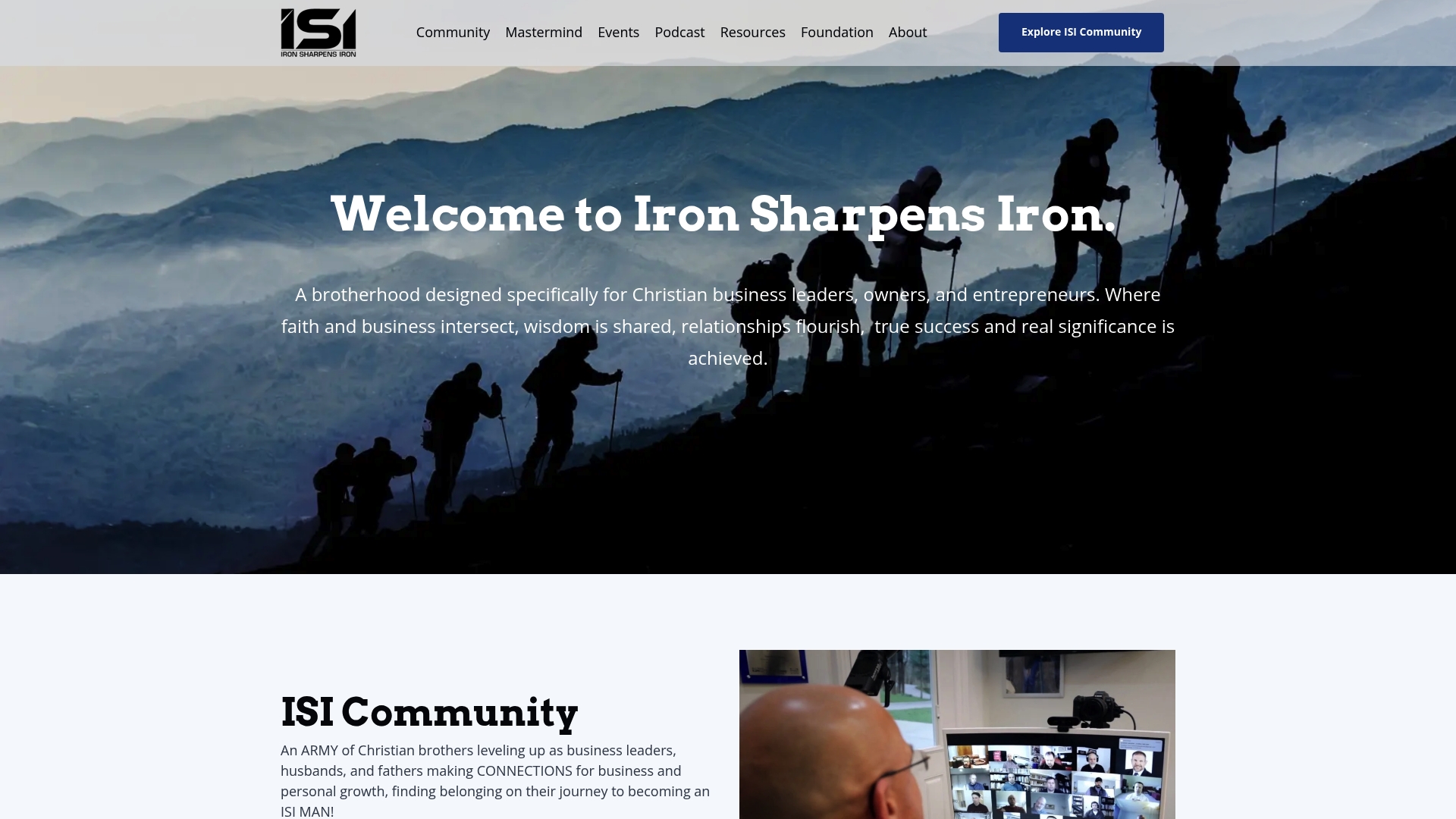
The application process is straightforward: you share where you are in business and life, and the team works to place you in a cohort that fits your stage and values. Confidentiality is built into the model from day one. Facilitation is consistent. And the men in the room are there for the same reason you are — to lead better, in every area that matters.
If that resonates, the next step is simple: visit isibrotherhood.com and start your application. The right group is waiting.
Further reading and sources
- EXECUTIVE PEER ADVISORY GROUPS: WHO THEY ARE? WHAT ARE THEIR BENEFITS?
- EXECUTIVE PEER ADVISORY GROUPS: WHO THEY ARE? WHAT ARE THEIR BENEFITS? WHY DO MEMBERS JOIN AND STAY?
- Lonely Up Top? 15 Excellent Reasons To Join A CEO Peer Group
- Strength In Numbers: How CEO Networks Drive Success
- Best CEO Peer Groups in 2026: Vistage, YPO, EO Compared