

Christian negotiation means stewarding what God has entrusted to you, pursuing mutual benefit instead of maximum extraction, and protecting your witness even when it costs you leverage. The practical framework for doing this well is called PAUSE: Prepare, Affirm, Understand, Search, Evaluate. What follows are the scripts, checklists, and hard calls that make it work at the negotiating table, not just in a devotional.
TL;DR:
- Success depends on thoroughly preparing with prayer and gathering facts before entering negotiations to avoid costly mistakes.
- Building trust through honesty and affirming relationships can facilitate fair deals aligned with biblical stewardship and justice.
- Asking strategic questions and brainstorming creative trades often reveals more value than initial negotiations assume.
- Document agreements promptly and follow up to maintain long-term integrity and protect ongoing relationships.
- When faced with unethical tactics, walking away or escalating through proper channels upholds witness and stewardship principles.
Table of Contents
- Core Biblical Principles That Should Shape Every Negotiation
- The PAUSE Framework: What Each Step Looks Like at the Table
- Practical Negotiation Steps for the Workplace
- Sample Language for Christian Negotiation Moments
- Facing Tough Tactics and Ethical Dilemmas
- How ISI Brotherhood Members Practice This in Real Time
- Making This a Habit, Not a One Time Read
- Sources
Core Biblical Principles That Should Shape Every Negotiation
Every negotiation forces a choice: treat the deal as a contest to win, or treat it as a resource to steward well. Scripture points firmly toward the second option. What you're negotiating over, whether it's a contract, a salary, or a vendor agreement, was never fully yours to begin with. You're managing it on behalf of someone else, and that changes how hard you should push and what you're willing to sacrifice to win.
Several biblical commitments anchor this:
- Stewardship. Resources, deals, and relationships are entrusted to you, not owned outright, which means the goal is faithful management rather than personal maximization.
- Justice and truthfulness. Scripture repeatedly condemns cheating, false weights, and deceit in commerce, setting a floor no negotiator should go below regardless of what the other side is doing.
- The I-Thou posture. The person across the table is an image bearer, not an obstacle. Adopting this posture reframes tactics: curiosity and questions replace positional pressure.
Two scripture narratives carry this principle into real negotiation scenarios, showing how authenticity in branding builds trust and growth. Daniel, negotiating with his captors over diet and conduct, didn't demand his way. He proposed a test, gave the other side an easy path to say yes, and let results make his case. Abigail, facing an enraged David, moved fast with tribute, honest acknowledgment, and de-escalating language that averted bloodshed. Both examples show negotiation as a tool for stewardship and justice, not domination.
Commerce itself isn't the problem. The Gospel Coalition has made the case that honest commercial transactions can be a means of loving your neighbor rather than something inherently shady. That distinction matters for anyone who's felt guilty about negotiating hard for a fair price. The guilt belongs to deception, not to firmness.
The PAUSE Framework: What Each Step Looks Like at the Table
PAUSE isn't a slogan. It's a five step sequence you can actually run before your next hard conversation, built specifically for biblical negotiation.
- Prepare. Pray specifically about the outcome and your own heart. Gather the facts cold, without spin. Call your Personal Board or a trusted mentor before you walk in, not after it goes sideways. Set your objectives and decide your faith-informed fallback position in advance, so you're not deciding it under pressure.
- Affirm. Open by naming the relationship you want to protect, not just the deal you want to close. This isn't weakness; it's setting the tone before positions harden.
- Understand. Ask questions before you propose solutions. What's driving their number? What constraint are they not saying out loud?
- Search. Brainstorm trades before you settle. Most negotiations have more room for creative value exchange than either side initially assumes.
- Evaluate. Judge each option against three filters: does it steward resources responsibly, does it treat both parties justly, and does it protect the relationship long term?
Pro Tip: Practitioners consistently report that Prepare is the step people skip and the one that costs them most. Block real time for prayer and counsel before a negotiation, the same way you'd block time to review a contract.
Practical Negotiation Steps for the Workplace
The PAUSE framework gives you the posture. Here's the checklist that turns it into action across an actual deal cycle.
Before you sit down:
- Pray over the specific decision, not just a general request for wisdom.
- Gather every fact you can verify, and separate it clearly from assumptions.
- Set your objectives and your walk away point before emotions enter the room.
- Identify every stakeholder who's affected by the outcome, not just the person across the table.
- Bring the decision to your Personal Board or a mentor for counsel and a reality check.
While the negotiation is live:
- Set a clear agenda so the conversation doesn't drift into pressure tactics.
- Confirm you understand their actual interests before you counter, not just their stated position.
- Trade value deliberately. Offer something that costs you little but helps them a lot, and ask for the reverse.
- Protect the rhythm of the conversation. Don't let urgency from the other side rush you into revealing your fallback position too early.
After the deal closes:
- Document the agreement in writing, including who owes what and by when.
- Steward the relationship past the signature. A closed deal isn't the end of your responsibility to the other party.
- Follow up on deliverables on your side before you chase theirs.
Sample Language for Christian Negotiation Moments
Words matter more in tense moments than most negotiators plan for. Having a few lines ready keeps you from improvising in a way you'll regret.
- Opening the conversation: "I want this to work for both of us long after we sign anything. Can we start by each laying out what matters most here?"
- Probing interests: "What would make this a clear win for your side?" or "Is there a constraint on your end I should know about before I propose anything?"
- Proposing a trade: "I need flexibility on the timeline. In exchange, I can offer a higher deposit up front." Frame every ask alongside an offer.
- Responding to pressure: "I want to give you a real answer, not a rushed one. Let me come back to you by Thursday."
- Naming dishonesty without escalating: "That number doesn't match what we discussed last week. Can you help me understand the change?"
A negotiation script isn't about sounding polished. It's about having language ready so a pressured moment doesn't pull words out of you that you'll have to walk back later.
For documenting agreements, a simple written summary sent same day, listing terms, deadlines, and who confirmed what, prevents most of the "that's not what we agreed to" disputes before they start.
Facing Tough Tactics and Ethical Dilemmas
Some negotiators will use tactics built to pressure you into compromising your standards. Deadline manipulation, false urgency, selective information, and moving targets after you've conceded ground are common, and negotiation ethics scholarship treats deception as a long term liability even when it produces a short term win.
- False urgency: Slow down deliberately. Ask for the deadline in writing and question why it exists.
- Selective disclosure: Ask direct questions that require a direct answer, and note evasiveness.
- Shifting terms after agreement: Point back to your written documentation immediately, calmly, without accusation.
Your decision rule should be simple: when protecting your witness and stewarding well means walking away from a favorable number, walk away. If deception continues after you've named it plainly, escalate through documentation, then peer counsel, then legal steps if the relationship is contractual. Repeated bad faith from a supplier or partner is grounds to end the relationship, not just the current deal.
Pro Tip: Get the right men in the room before you ever need this kind of counsel. Deciding who you trust with a hard call is much harder to do in the middle of a crisis than ahead of one.

How ISI Brotherhood Members Practice This in Real Time
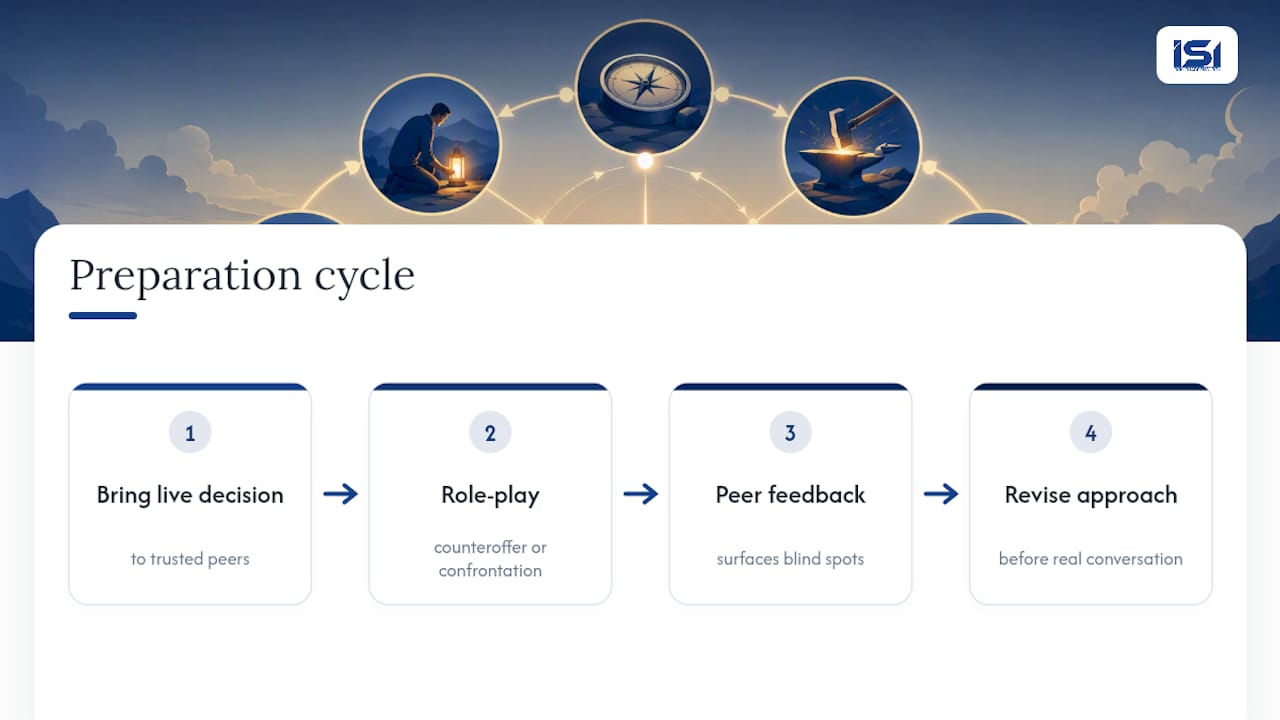
Reading a framework and running it under pressure are different skills. Members bring live negotiation decisions to a trusted group before they happen, not after, which sharpens the Prepare and Understand steps long before the actual conversation. Regular mastermind meetings create a low-stakes place to role-play a hard counteroffer or a confrontation with a difficult vendor, and peer feedback surfaces blind spots faster than solo preparation ever does. For deeper preparation, ISI's guide to biblical decision making and the podcast episode on navigating conflict both walk through scenarios members bring to their own tables.

Making This a Habit, Not a One Time Read
The men who actually use PAUSE aren't the ones who read it once. They're the ones who bring their next hard negotiation to a trusted group before they walk into it. That's the whole premise behind a Personal Board of Advisors: get the right men in the room, protect the rhythm of meeting consistently, and make confidentiality clear from day one so hard conversations stay safe. If you want to see what that looks like in practice, read what it means to lead like a patriarch. This week, bring one upcoming negotiation to someone you trust before you run it.
— Derek
Sources
- Biblical Negotiation - Resolving Conflict With the PAUSE Principle
- How Should a Christian Negotiate a Deal?
- Negotiation at Work Doesn't Mean Leaving Faith at the Door