

Run a 90-minute meeting with five timed blocks: check-in (10 minutes), commitment review (15), hot seat (50), closing commitments (15). This structure, outlined by Mastermind Better, keeps a group from sliding into a friendly hangout with no teeth.
Paste this into your next calendar invite: "90-min mastermind: state check-in, wins/accountability, [Name]'s hot seat, group commitments, close." Send a pre-meeting prompt 24 hours out asking each member to report on last meeting's commitment and, if they're up for the hot seat, submit their problem in one sentence.
- Check-in (10 min): energy and state, not status
- Updates (15 min): commitment accountability, quick wins
- Hot seat (50 min): one member, deep work
- Commitments (15 min): specific, timebound asks
Pro Tip: Appoint a timekeeper before the meeting starts. A visible timer on screen does more to protect the agenda than any verbal reminder.
Key Takeaways
A 90-minute agenda with five timed blocks, a disciplined hot-seat protocol, and dated commitments is what makes a mastermind meeting productive instead of just pleasant.
| Point | Details |
|---|---|
| Use the 90-minute default | Check-in, updates, hot seat, commitments, close protects both depth and time. |
| Separate goals from commitments | Require one specific, dated, verifiable commitment per member each meeting. |
| Protect the hot-seat protocol | One-minute problem statement, clarifying questions, then structured feedback. |
| Schedule a meta-meeting twice a year | Review format, cadence, and membership fit every six months. |
| Consider a ready-made structure | Isibrotherhood places members into small, values-aligned cohorts already running this rhythm. |
Table of Contents
- What Are the Core Mastermind Meeting Formats?
- Which Timeboxed Agenda Should You Use?
- How Do You Run a Hot Seat Step by Step?
- How Do You Keep Members Accountable Between Meetings?
- How Should You Onboard New Members and Set Ground Rules?
- What Does a 12-Week Mastermind Rhythm Look Like?
- Find a Ready-Made Mastermind Community
- Sources
What Are the Core Mastermind Meeting Formats?
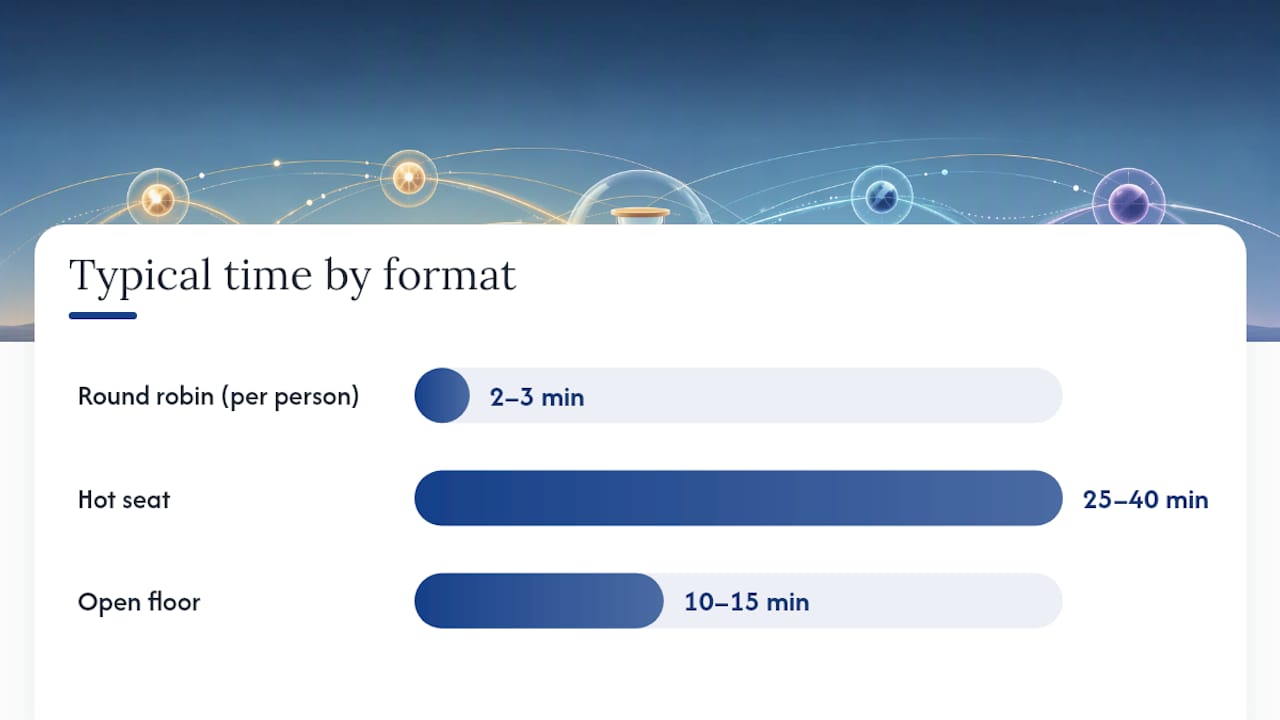
Three formats cover almost every situation a mastermind group faces, and picking the wrong one is the fastest way to waste an hour. Round robin gives every member 2 to 3 minutes for a quick update. Hot seat hands the floor to one person for 25 to 40 minutes of focused problem-solving. Open floor runs 10 to 15 minutes for loose resource sharing, referrals, or quick asks, according to The Silver Liners' breakdown of sustainable mastermind formats.
| Format | Typical time | Facilitator's key move |
|---|---|---|
| Round robin | 2 to 3 min per person | Enforce the clock, no exceptions |
| Hot seat | 25 to 40 min | Redirect storytelling into questions |
| Open floor | 10 to 15 min | Cap requests, park longer threads |
Use round robin for larger or newer groups still building trust. Reserve hot seat for groups of 4 to 8 who know each other well enough to give direct feedback. Open floor works best as a closer, once the heavier lifting is done.
Pro Tip: Resist the urge to let round robin updates run long just because someone has a good week. Depth belongs in the hot seat, not the warmup.
Which Timeboxed Agenda Should You Use?
The right agenda length depends on group size and how much hot-seat time each member needs. Here are three you can copy directly.
- 60-minute agenda. Check-in (5), commitment review (10), hot seat (35), commitments and close (10). Best for smaller groups of 4 to 5.
- 75-90 minute agenda. Wins and check-in (10), accountability updates (15), hot seat with presentation, clarifying questions, and feedback (50), takeaways and commitments (15). This format is detailed by Altus Blog's mastermind guide.
- 120-minute agenda. Check-in (10), updates (20), two hot seats at 40 minutes each, group commitments (10).
Before any hot seat, the presenting member should submit a one-sentence problem statement well in advance, per Mastermind Better's facilitation guidance. A fuzzy hot seat almost always traces back to a fuzzy pre-statement.
Hot-seat prep checklist:
- One-sentence problem, written in advance, not improvised
- Relevant numbers or context (revenue, timeline, decision deadline)
- One specific outcome they want from the group
Calendar copy to reuse:
- Objective: "Solve [problem] and leave with two concrete next steps."
- Homework prompt: "Reply with your commitment status and, if you want the hot seat, your one-line problem."
- Suggested attachment: last meeting's commitment list
How Do You Run a Hot Seat Step by Step?
A hot seat falls apart when the group skips straight to advice before understanding the problem. Follow this sequence instead, based on Mastermind Better's hot-seat protocol:
- Problem statement (1 minute). The hot-seat member reads their prepared sentence, nothing more.
- Clarifying questions (5-10 minutes). Members ask questions, not opinions. "What have you already tried?" beats "Have you thought about hiring someone?"
- Structured feedback (20-25 minutes). Go around the room; each person offers one response before anyone speaks twice.
- Summary (5 minutes). The hot-seat member states what they heard and what they'll do next.
Facilitator script: "That sounds like a great story for round robin. Let's turn it into a question." Or simply: "Time's up on this angle. Sarah, you haven't spoken yet."
Pro Tip: If someone starts a response with "This reminds me of when I…", that's your cue to redirect. Feedback framed as a personal story eats time and rarely helps the hot-seat member decide anything.
- Cut off storytelling within 10 seconds of it starting
- Move to commitments the moment feedback repeats itself
- Never let the hot-seat member defend instead of listen
How Do You Keep Members Accountable Between Meetings?
Goals describe a destination. Commitments describe the next concrete step, and only commitments belong in your closing block. A workable template: "I will [specific action] by [date], and I'll report [measurable result]." Sophydale's explanation of mastermind mechanics makes the same distinction: vague intentions don't survive contact with a busy week, but a dated, verifiable commitment does.

Send a written commitments summary within 24 hours of each meeting. That single habit does more for follow-through than any reminder app.
On cadence: weekly works for high-intensity groups chasing fast growth, biweekly suits most established groups, and monthly fits members with heavier travel schedules. Group points out that consistency beats frequency. A group that reliably meets every two weeks outperforms one that meets weekly for a month and then vanishes.
- Set a cadence the group can sustain for a year, not a quarter
- Schedule a meta-meeting every six months to review format and membership fit
- Ask directly: is this still the right group size and mix?
- Meta-meeting checklist: review attendance, hot-seat quality, and whether commitments are actually landing
How Should You Onboard New Members and Set Ground Rules?
A group that skips onboarding pays for it later, usually in the form of an unprepared hot seat or a member who dominates every round robin.
- Send an expectations document covering meeting length, prep requirements, and confidentiality
- Share sample commitment language so new members see the standard immediately
- Offer a 60- to 90-day trial period before full membership is confirmed
Ground rules worth enforcing:
- Timeboxes apply to everyone, including the facilitator
- No interrupting during clarifying questions or structured feedback
- Disagreement is fine; dismissiveness is not
Rotate the facilitator role every 4 to 6 weeks in mature groups, or keep one permanent facilitator in newer groups still establishing rhythm. Either way, someone owns timekeeping and someone owns notes. Passion for Business's mastermind guide recommends a parking lot for off-agenda items so tangents don't hijack the format.
What Does a 12-Week Mastermind Rhythm Look Like?
A 12-week cycle gives every member in a group of 6 at least one hot-seat turn, with room for themed sessions that keep the group learning something new.
- Weeks 1-2: Onboarding review, first hot seats begin
- Weeks 3-6: Standard rotation, one hot seat per meeting
- Week 7: Themed session (pricing strategy or hiring decisions)
- Weeks 8-10: Continue rotation, second round of hot seats
- Week 11: Themed session (burnout or growth experiments)
- Week 12: Review meeting. Ask: renew for another cycle, adjust cadence, or replace a member?
Theme weeks work best when scheduled after the group has built trust, usually not before week 6 or 7.
A Faith-Centered Example from Iron Sharpens Iron
Isibrotherhood groups often open with a 5-minute devotion or scripture reflection before the state check-in, then run the same hot-seat and commitments structure. Secular groups can adapt this by swapping the devotion for a values statement or a gratitude round, keeping the core format intact.

What Separates a Memorable Mastermind Meeting
The best facilitators I've studied share one instinct: they protect the format even when the group wants to chat. They insist on specific, dated commitments instead of vague intentions, and they build a culture where honest feedback is normal, not risky.
Pro Tip: Address a dominant member privately, right after the meeting, not in front of the group. Use a parking lot in the moment so their point isn't lost, just delayed.
Find a Ready-Made Mastermind Community
Building this structure from scratch takes trial and error most leaders don't have time for. Isibrotherhood offers something different: values-aligned mastermind cohorts already built around the format described above, with accountability, facilitation, and a faith-centered foundation already in place.
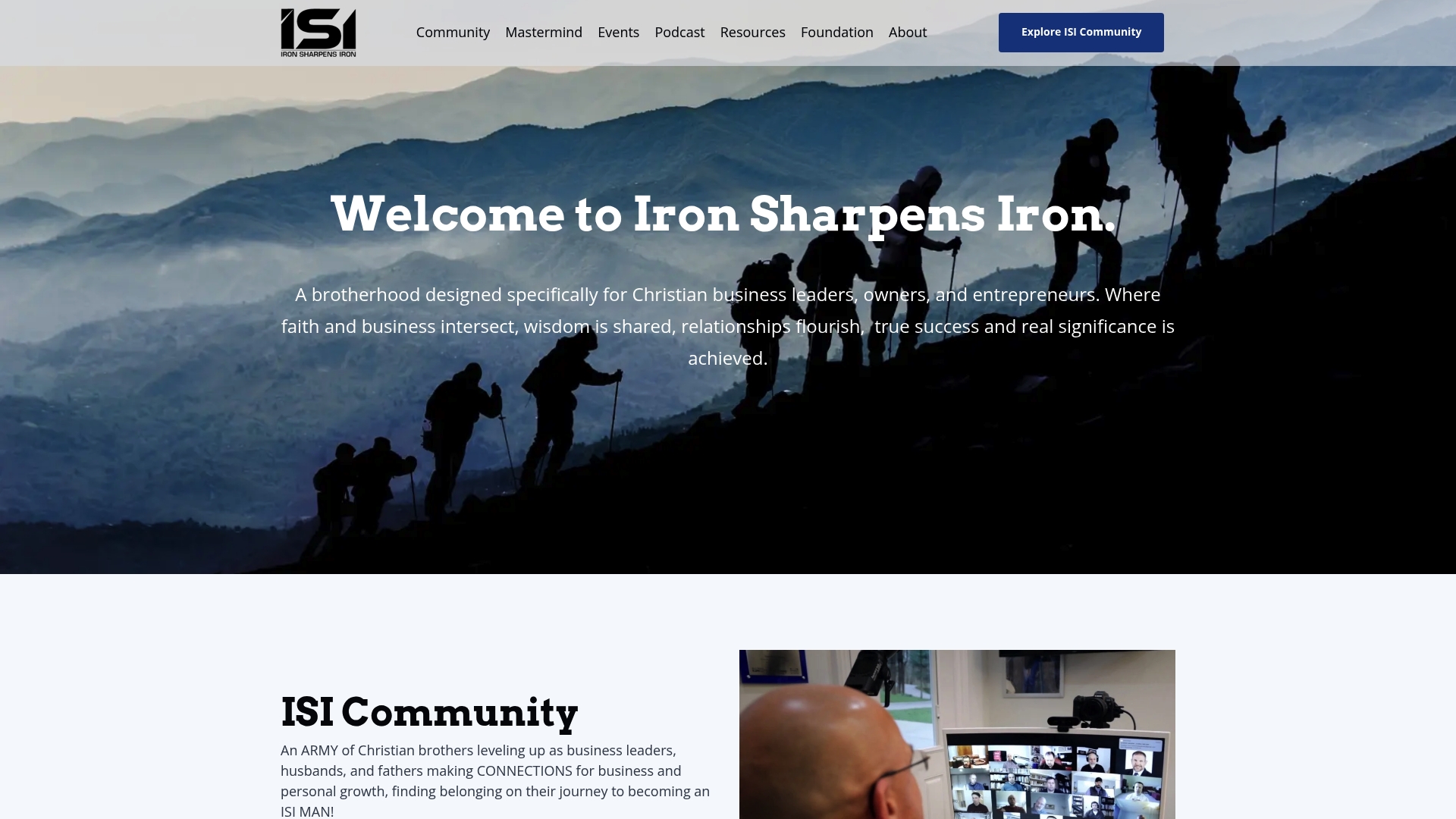
Members get placed into a small Personal Board of Advisors, meeting regularly across five areas of life: personal, spiritual, relational, professional, and financial. Instead of assembling a group and writing your own ground rules, you join one already running on a proven rhythm. If you're ready to stop building the structure alone, apply to join an Isibrotherhood mastermind cohort and see which group fits your season of leadership.
Sources
- How a Mastermind Meeting Actually Runs — Mastermind Better
- Group
- Sustainable mastermind groups: how to maximize impact and engagement — The Silver Liners
- Launch and run a personal mastermind group: a guide — Altus Blog
- How does a mastermind work? — Sophydale
What is a mastermind meeting agenda? A mastermind meeting agenda is a timeboxed structure, usually including a check-in, updates, a hot seat, and commitments, designed for a small peer group focused on deep problem-solving and accountability.
How long should a mastermind meeting run? Most groups run 60 to 120 minutes, with 90 minutes being the most common default for a five-block agenda.
How many people should be in a mastermind group? Groups of 4 to 10 members work best, small enough for real depth, large enough to bring varied perspective.
How often should a mastermind group meet? Biweekly meetings suit most groups, though weekly or monthly can work if the group stays consistent with whichever rhythm it picks.
What is a meta-meeting? A meta-meeting is a periodic session, ideally every six months, where the group reviews its format, cadence, and membership fit instead of running a normal agenda.