
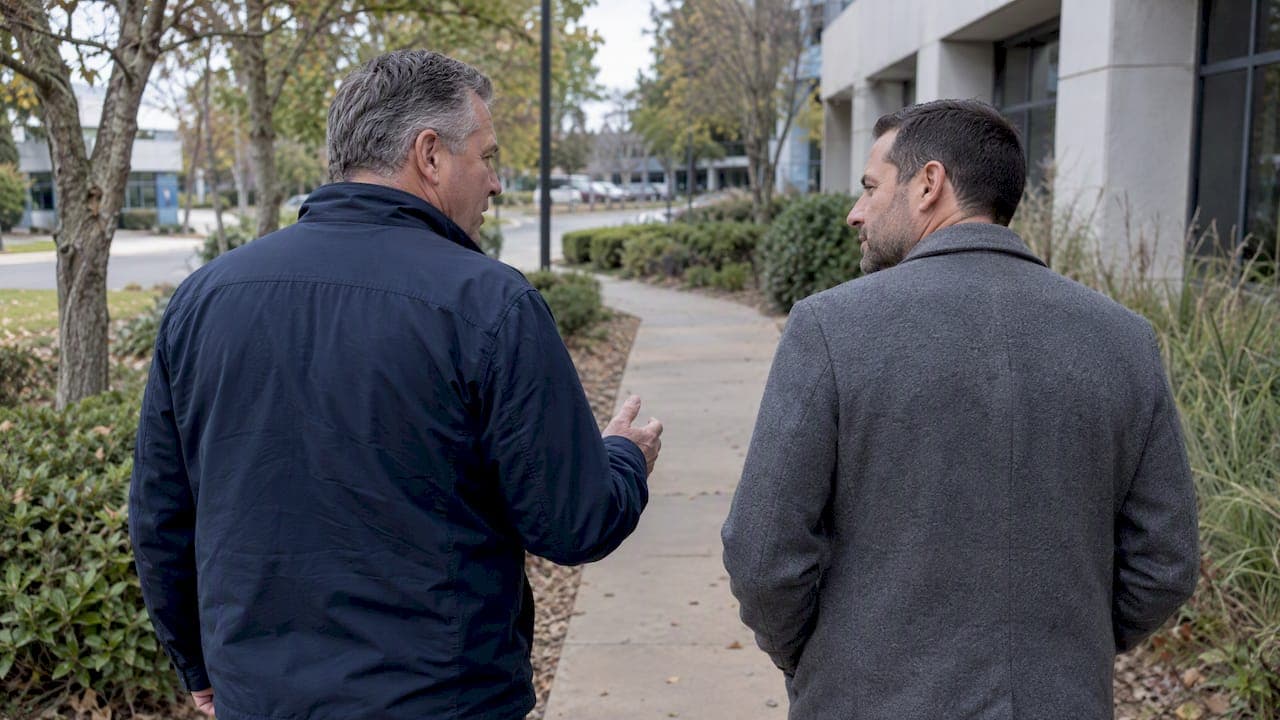
If you are a Christian CEO who feels depleted, the right immediate step is a decisive pause: lower your highest-stakes decisions for a few days, tell one trusted advisor what is really happening, and get a medical check if you notice signs of depression. Recovery is common, documented, and possible without walking away from your calling.
TL;DR:
- The WHO treats burnout as an occupational phenomenon marked by exhaustion, cynicism, and reduced effectiveness, but depression signs require clinical care, not devotional routines.
- A strong sense of calling can weaken boundaries and turn setbacks into identity shame; stewardship reframes rest as care for your capacity, not failure.
- Use a recovery plan spanning 90 days, with weekly accountability, therapy or coaching, evening and weekend communication limits, and monthly reviews.
- A Personal Board of Advisors should include four to six trusted peers, meet monthly for deeper discussion, and hold brief weekly meetings to catch decline.
- Psychological safety is linked to lower burnout and better retention; listening sessions, anonymous feedback, and workload limits address team conditions, not only the CEO.
Table of Contents
- What burnout actually is and the warning signs to watch for
- Why calling and stewardship make Christian CEOs more vulnerable
- A faith-informed recovery plan you can start this week
- Organizational changes that lower burnout risk for you and your team
- How a Personal Board of Advisors protects you from isolation
- Balancing family, faith, and the demands of the business
- Stories of Christian leaders who recovered through faith and community
- How burnout distorts your spiritual life and your business decisions
- Prayer and Scripture practices built for the pressure CEOs carry
- Rest as stewardship, not weakness
- How ISI Brotherhood supports recovery and ongoing resilience
- FAQ
- Sources
What burnout actually is and the warning signs to watch for
The World Health Organization classifies burnout in the ICD-11 as an occupational phenomenon, not a medical condition, built from three dimensions: energy depletion or exhaustion, growing mental distance or cynicism toward your work, and a felt drop in professional effectiveness. That framing matters for leaders who assume burnout means something is broken in their character. It describes a workplace response, not a verdict on your faith or your competence.
For a CEO, those three dimensions show up in specific ways:
- Decision fatigue that makes routine calls feel heavier than they used to
- Cynicism toward the mission, the team, or customers you used to champion
- A creeping shame about your identity when performance slips
- Avoidance of delegation, even when your team is capable and willing
One distinction matters more than any checklist: the World Health Organization is clear that burnout framing should never delay treatment for depression. If you notice persistent hopelessness, loss of interest in nearly everything, or any thoughts of suicide, that calls for immediate professional care, not a devotional reset.
Why calling and stewardship make Christian CEOs more vulnerable
A strong sense of calling is a gift, and it is also a risk factor. Research on what scholar Arianna Molloy calls a "calling paradox" describes how leaders who feel deeply called to their work find it harder to set boundaries around it. The calling itself becomes the reason to keep going past the point of wisdom, and Molloy's research ties this pattern to "toxic burnout," a form marked by identity shame rather than simple tiredness.
Christian leadership culture can unintentionally reinforce the pattern:
- Spiritualized work ethic turns overwork into a virtue rather than a warning sign
- Failure gets read as a faith problem, so struggling leaders hide it instead of naming it
- Isolation at the top leaves few people positioned to notice decline early
- Role and identity fuse together, so a business setback feels like a spiritual one
Molloy's work points toward a stewardship model of leadership as the corrective: you are called to manage what you have been given well, including your own capacity, rather than to perform heroically without limit. Stewardship gives you theological permission to set a boundary. Heroism never does.
A faith-informed recovery plan you can start this week
Recovery works best as a sequence, not a single decision. Start with triage, move into daily rhythms, add clinical support where it is warranted, and build toward a 90-day reset.
- Triage now: pause or delegate your highest-stakes decisions for a few days, tell one trusted advisor the full truth, and get a basic medical check if you are sleeping poorly or feeling numb.
- Rebuild daily rhythms: anchor a short morning prayer practice and one unhurried Scripture reading, even 10 minutes, before the inbox opens.
- Protect a weekly rest day: some practitioners call this a "burden Sabbath," a day where you intentionally stop carrying the weight of decisions rather than just stopping work.
- Add clinical support where needed: a licensed therapist familiar with executive stress, paired with pastoral or spiritual direction, covers ground that either one alone misses. Watch for red flags, including suicidal thoughts or pervasive loss of interest, that require an urgent referral rather than a scheduled appointment.
- Set a 90-day checklist: a weekly accountability meeting, a therapy or coaching cadence you actually keep, a hard boundary on evening and weekend communications, and a monthly review of whether the rhythm is holding.
Scheduling rest will feel like it is stealing time from the business. It is not. Fuller Studio's reflection on sustainable ministry ties burnout recovery to relational repair, shalom with God, self, and others restored together rather than in isolation.
Pro Tip: Put your weekly rest day on the calendar as a recurring meeting titled with a project name if you need cover, then guard it the way you would guard a board meeting.
Organizational changes that lower burnout risk for you and your team
Your own recovery sticks better when the organization around you changes too. Harvard T.H. Chan School of Public Health reports that higher psychological safety correlates with lower burnout and better retention, especially during periods of crisis, which makes it a lever worth pulling at the leadership level, not just the individual one.
Four moves make a real difference:
- Start regular listening sessions where leaders hear problems before they become crises
- Add an anonymous feedback channel so junior staff can flag concerns without career risk
- Strengthen leader-member exchange by investing in the relational quality between you and direct reports, which reduces their need to cope by overworking
- Cap high-intensity streaks and redistribute responsibilities before fatigue becomes the norm
Separate research on psychosocial safety climate, published by the American Psychological Association, found that a manager's own burnout mediates downstream effects on managerial quality. Improving the upstream climate, not just coaching the individual leader, is linked to lower burnout and better decisions from the top.
| Lever | What it does | First step |
|---|---|---|
| Psychological safety | Lowers burnout, improves retention | Hold a monthly listening session |
| Leader-member exchange | Reduces compensatory overwork | Invest in one-on-one relational quality |
| Workload controls | Prevents fatigue accumulation | Cap consecutive high-intensity weeks |
| Modeled rest | Signals permission culturally | Take your Sabbath visibly |
When you model rest publicly rather than quietly, your team reads it as permission rather than a loophole only leadership gets to use.
How a Personal Board of Advisors protects you from isolation
Isolation at the top is one of the clearest risk multipliers for burnout, and a Personal Board of Advisors is the most direct counter to it: a small, trusted group of peers who hold you accountable across the personal, spiritual, relational, professional, and financial parts of your life, not just the business metrics.
Building one does not require elaborate infrastructure:
- Get the right men in the room: four to six peers who are honest enough to challenge you and discreet enough to be trusted with the truth.
- Protect the rhythm: a monthly deeper meeting plus a short weekly check-in holds the group together without becoming another burden.
- Build a simple agenda: rotate through the five domains so no one area, usually the professional one, dominates every conversation.
- Make confidentiality clear from day one: state the norm out loud before the first real disclosure, not after.
The weekly cadence matters because it catches decline early, before a bad quarter becomes a crisis. If the group starts feeling performative or one person dominates every meeting, that is a signal to reconfigure membership rather than quietly let the board go dormant. A board that cannot hold honest conversation is not protecting you from anything.
Balancing family, faith, and the demands of the business
Burnout rarely stays contained to the office. The same depletion that shows up in a Monday strategy meeting shows up at the dinner table and in how present you are at church. Protecting family and faith time is not a separate project from preventing burnout. It is one of the main defenses against it.
A few practical boundaries hold up better than good intentions alone:
- Set a firm end time for workdays most nights, including when a deal feels urgent
- Protect one weekly block for your spouse or family that nothing short of an emergency moves
- Treat your own spiritual practices, prayer, worship, Scripture reading, as fixed appointments rather than whatever is left over
- Tell your family and your Personal Board when work pressure is rising, before it shows up as irritability at home
The hardest part is usually not knowing these boundaries matter. It is believing they are allowed to outrank a business emergency. Leaders who build in these guardrails early tend to recover faster when a real crisis hits, because the rest of their life has not already been emptied out.
Stories of Christian leaders who recovered through faith and community
You are not the first leader to hit this wall, and the stories that exist point consistently toward the same exit ramp: community and faith practice together, not willpower alone.
Author and pastor Max Lucado's own burnout became a turning point rather than an ending. In coverage from Christianity Today's Russell Moore Show, Lucado describes his burnout as an occasion to seek the Holy Spirit's help rather than evidence of spiritual failure. That reframe, from failure to invitation, shows up repeatedly in how Christian leaders talk about recovery.
Christianity Today's reporting on senior leaders found that decision overload and role conflict were common threads in how executives described their own burnout. The leaders who recovered were rarely the ones who simply worked less. They were the ones who brought the struggle into the open with people who could actually help carry it, whether that was a mentor, a small group, or a counselor.
The pattern across these accounts is consistent: isolation deepens burnout, and disclosed struggle inside a trusted relationship is where recovery actually starts.
How burnout distorts your spiritual life and your business decisions
Burnout does not stay confined to your schedule. It reshapes how you hear God and how you make decisions, often without you noticing the shift until later.
Energy depletion narrows your attention to whatever is loudest and most urgent, which crowds out the quiet reflection prayer usually requires. Cynicism, the second dimension in the WHO's definition, can bleed from work into faith itself, leaving you going through religious motions without sensing much behind them. That is not a sign your faith has failed. It is a predictable effect of depletion on attention and emotion.
On the business side, reduced professional efficacy, the third dimension, shows up as slower, more avoidant, or more reactive decisions. Leaders in this state often default to control instead of trust, because depletion makes ambiguity feel unbearable. Ironically, this is exactly when godly counsel matters most and is hardest to seek, since cynicism and shame both push toward isolation rather than disclosure.
Recognizing this cycle is itself useful. When a decision feels unusually hard to make or a prayer feels unusually hollow, that is worth treating as data about your current capacity, not as proof of spiritual decline.

Prayer and Scripture practices built for the pressure CEOs carry
Generic devotional advice rarely fits the specific weight a CEO carries: payroll, personnel decisions, investor expectations, and the sense that everyone is watching for your next move. A few practices adapt well to that load.
Short, fixed-time prayer works better than open-ended prayer when your mind is racing. Five focused minutes before the first meeting, naming specific decisions and specific people by name, tends to hold up better under pressure than a vague request for peace.
Scripture meditation aimed at identity, rather than performance, counters the shame that often drives toxic burnout. Returning to passages that describe your standing as beloved rather than your output as sufficient interrupts the cycle where your worth rises and falls with quarterly numbers.
A brief examen at the end of the day, a few minutes reviewing where you noticed God's presence and where you felt most depleted, builds the kind of self-awareness that catches burnout early rather than after a crisis forces the issue. None of these practices require more time than a CEO already has. They require protecting a few fixed minutes rather than letting the day's demands absorb everything.
Rest as stewardship, not weakness
Here is what I have come to believe after watching leaders white-knuckle their way through exhaustion: the barrier to rest is almost never a spiritual weakness. It is a theological mistake, the belief that stewardship means never stopping. Scripture never asks that of you. It asks you to manage well what you have been given, and that includes your own body and mind.
Burnout is common among called leaders, and it is recoverable. The way back usually runs through honest community, not through gritting your teeth alone.
— Derek
How ISI Brotherhood supports recovery and ongoing resilience
We built our community for exactly this kind of pressure. Through ISI Community, at $97 a month, you get access to a broader network of Christian business leaders and ongoing resources across the five domains of personal, spiritual, relational, professional, and financial growth. For leaders who need deeper, weekly accountability, ISI Mastermind, at $650 a month, places you in a small Personal Board of Advisors that meets regularly to challenge and support you through exactly the kind of depletion this article describes.
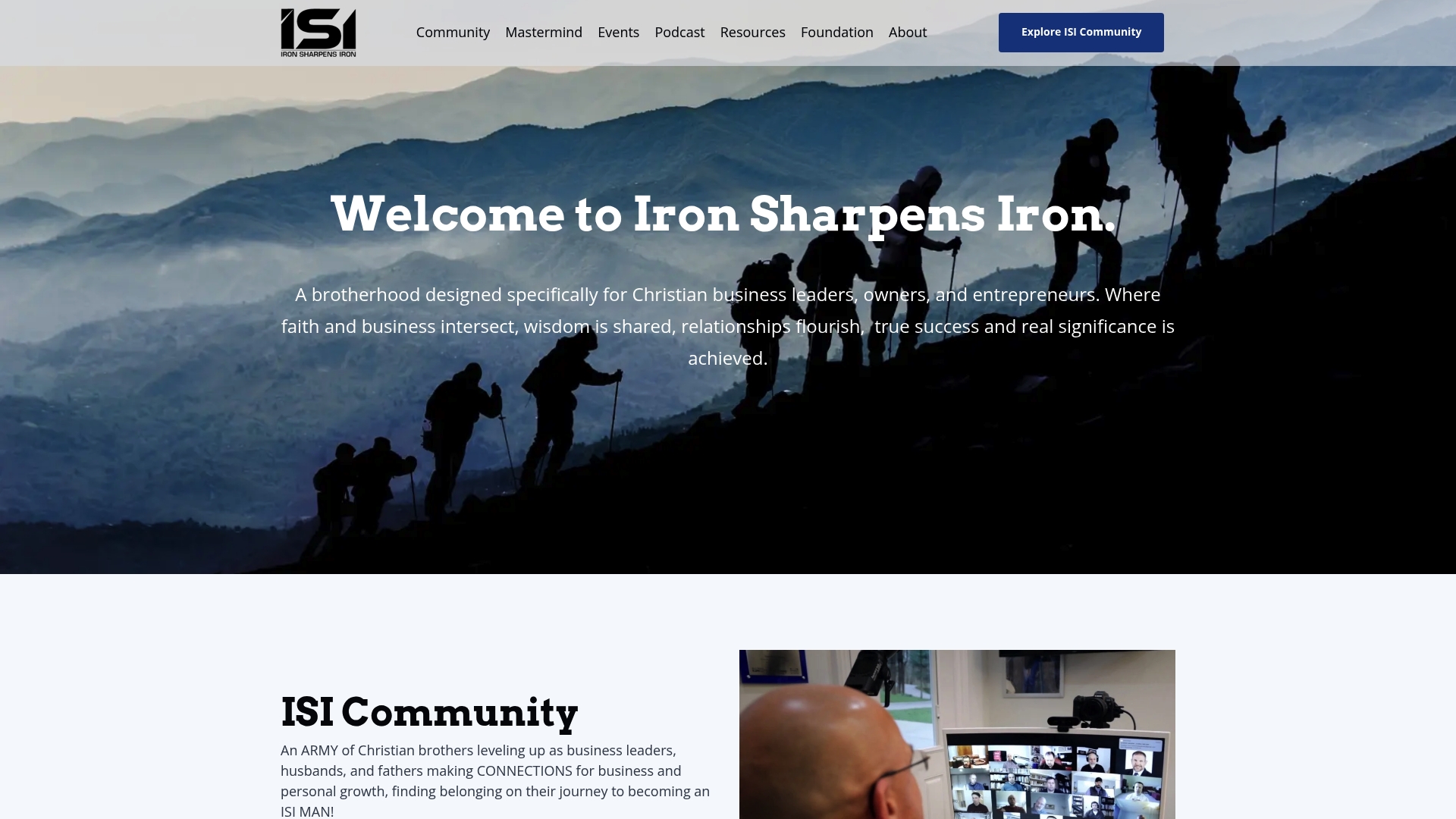
If you need a more intensive reset, our Deep Dive ONE THING Retreat offers focused time away for strategic recalibration and restoration, with pricing available on request.
We see our role as one piece of your recovery, not a replacement for clinical care when you need it. Our 30 to 90 Day Christian Leadership Playbook pairs well with either membership as a practical framework for the first season of change. Explore our growth-minded business community to see whether this season calls for a peer board, a weekly mastermind, or a dedicated retreat, and take the next step toward getting the support in place before the next hard quarter hits.
This article is general information, not a substitute for advice from a qualified doctor. Consult a qualified healthcare professional about your own circumstances before acting on anything here.

FAQ
What is the WHO definition of burnout?
The World Health Organization defines burnout in the ICD-11 as an occupational phenomenon with three dimensions: energy depletion, increased mental distance or cynicism toward work, and reduced professional effectiveness. It is described as resulting specifically from chronic workplace stress that has not been successfully managed.
Why are Christian CEOs especially prone to burnout?
A strong sense of calling can make boundary-setting harder, a pattern Arianna Molloy's research describes as a "calling paradox" that raises the risk of "toxic burnout" marked by identity shame. Spiritualized work ethic and isolation at the top compound the risk by discouraging leaders from disclosing struggle early.
When does burnout require professional mental health care instead of rest?
If symptoms include suicidal thoughts, pervasive loss of interest in nearly everything, or significant changes in movement or speech, the World Health Organization is explicit that this calls for immediate clinical referral rather than a wellness routine. Burnout framing should never delay treatment for depression.
How does a Personal Board of Advisors help prevent burnout?
A small group of four to six trusted peers who meet regularly provides the early accountability that isolated leaders usually lack, covering personal, spiritual, relational, professional, and financial domains rather than business metrics alone. Our ISI Mastermind builds this structure directly into its weekly cadence.
Can psychological safety at work actually lower burnout risk?
Yes. Harvard T.H. Chan School of Public Health reports that higher psychological safety correlates with lower burnout and better retention, particularly during periods of organizational crisis.
Sources
- Psychological safety at work is essential—especially amid crisis — Harvard T.H. Chan School of Public Health
- When your calling leads to burnout — Arianna Molloy (ORU)
- Caring practitioners: Relationships, burnout, and sustainability — Fuller Studio