
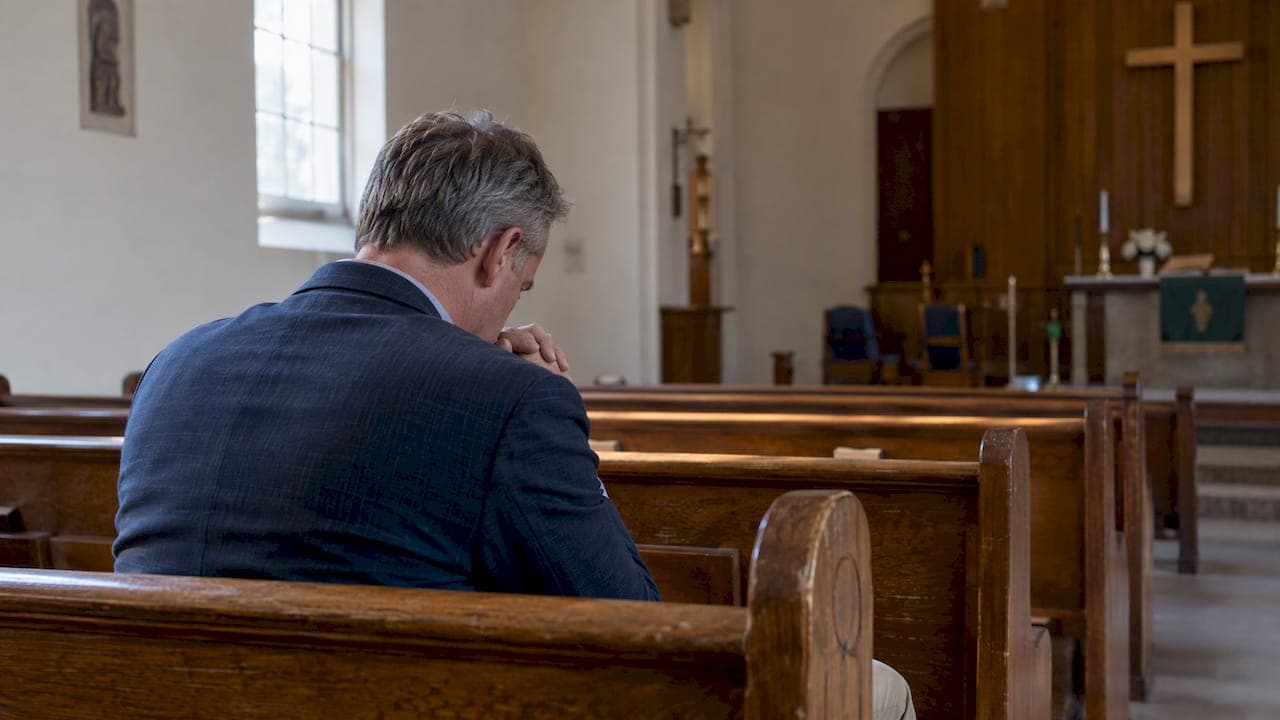
CEO spiritual formation is the slow, deliberate shaping of your inner life so that the person who makes the decisions is becoming more like Christ, not just more productive. It is not a retreat you take once a year or a devotional you squeeze in at 5 a.m. It is a set of rhythms, relationships and honest questions that keep your faith and your leadership from drifting into separate rooms.
If you carry payroll, people and pressure, this guide walks through what the research says about faith in the corner office, what formation looks like week to week, and how to build the kind of support most chief executives never get.
TL;DR
- Spiritual formation for a CEO is a rhythm of prayer, Scripture, rest and honest relationships, not a one-time event.
- Most CEOs hold faith-shaped values but carry the weight of leadership with little spiritual support, according to Barna's 2026 research.
- Formation grows best in community: a spiritual director, a small peer group, or both.
- Start small. One minute of prayer before the first meeting beats a perfect plan you abandon by February.
- A Personal Board of Advisors at ISI Brotherhood is one way to protect the rhythm and keep your commitments honest.
Table of Contents
- What spiritual formation means when you run the company
- Why it matters: what the research shows
- Five rhythms of a formed leader
- Steward or servant: let formation settle the question
- Where formation happens: three kinds of support
- The loneliness underneath it all
- A simple 90-day plan
- Perspective: formation is not a luxury
- How ISI Brotherhood supports your formation
- FAQ
- Sources
What spiritual formation means when you run the company
Spiritual formation is the lifelong process of being shaped into the image of Christ. For a pastor, that work is expected. For a CEO, it often gets crowded out by the quarter, the pipeline and the next hire.
The Pax Center describes spiritual direction as part of the broader field of spiritual formation, one that focuses on cultivating a person's relationship with God through prayerful listening and attention to where God is moving. That is a useful frame for a leader. Formation is less about getting better at something and more about learning to notice.
For an executive that noticing has practical edges:
- How you handle power. Who gets heard in your meetings, and who gets quiet?
- How you handle money. Is it a tool you steward or a scoreboard you serve?
- How you handle silence. What happens in you when the numbers dip and God feels far away?
None of these show up on a dashboard. All of them shape the company.
Why it matters: what the research shows
Faith is not rare in the executive suite. In a survey of 356 U.S.-based CEOs, Barna found that 89% either identify as Christian or say faith is important to them, a group the firm calls Faith-Forward. Among their top values were excellence (39%) and religious faith (34%).
The gap is not belief. It is support. Many of these leaders hold values that line up with Christian teaching, yet carry the weight of leadership with few places to process it. What they often need is not more information. It is a sacred pause, taken in the company of people who know them.
Faith often goes unspoken at work
A peer-reviewed study of strategic-level leaders found that many experience their spirituality as an innate but not overt North Star. They lean on it for people-related decisions, yet often fear judgment or sense a conflict with organizational goals. The task, the researchers suggest, is bridging private faith and public leadership.
Some of that tension is legitimate, since a company serves employees of many beliefs and operates under real legal limits. We cover that ground in our guide on integrating faith and business with legal guardrails.
Formation changes how you decide
The same research describes what it calls executive discernment: pausing a strategic choice to connect it with transcendent values. The point is not to extract a business answer from God. It is to widen your sight so you see the human impact of a decision, which can lead to different outcomes than data alone would suggest.
A second line of research points the same direction. A dissertation on senior executives at U.S. publicly traded companies found that personal spiritual experience shaped servant-leadership behavior more than traditional organizational authority did. And ethics scholar Craig Johnson argues in a chapter on spirituality and ethical leadership that spiritual development equips leaders to be both moral persons and moral managers, giving them a sense of mission that surfaces principles like integrity and justice.
These are studies of association and experience, not guarantees. They do not say that prayer raises revenue. They say that who you are becoming shapes how you lead.

Five rhythms of a formed leader
Formation is not a checklist, but it does need structure. Here are five rhythms we see CEOs return to, with a small first step for each.
| Rhythm | What it looks like | A first step |
|---|---|---|
| Prayer | Short, regular conversation with God, not a performance | One minute before your first meeting |
| Scripture | Slow reading of a small passage | One Proverb a day, read twice |
| Sabbath | A weekly stop that the business survives | Phone off for a set block each Sunday |
| Examen or journaling | A nightly look back at where you were present or absent | Three lines before bed |
| Honest relationships | Men who ask hard questions and keep confidence | One standing conversation a week |
Start with one minute
Most executives fail at formation by starting too big. A 45-minute morning routine collapses the first week travel gets heavy. We wrote about this in spiritual disciplines for entrepreneurs: begin with one minute of prayer and let it earn more room.
Protect the rhythm
Whatever you choose, put it on the calendar the way you would a board meeting. Rhythm matters more than intensity. A 10-minute practice kept for a year forms you more than a weekend of fervor followed by nothing.
Build in a pause before big decisions
Burnout and hurried decisions often travel together. When you are depleted, a large decision tends to feel like relief. Our piece on Christian CEO burnout makes the case for pausing big decisions so you keep your calling intact. That pause is a formation practice in itself.
Steward or servant: let formation settle the question
Leaders often ask whether they are meant to lead as servants or as stewards. Both are biblical, and they call for different postures at different moments. Formation helps you tell which one a situation requires, because you are listening before you act. We walk through the distinction in when to lead as steward or servant.
Where formation happens: three kinds of support
You cannot form yourself alone. Scripture says as much: iron sharpens iron. In practice, CEOs usually draw on three kinds of support, and many use more than one.
A spiritual director
Spiritual direction is a ministry of companionship. Lord of Life Lutheran Church describes it as a three-way conversation among you, the director and God. It is not consulting. Practitioners stress that it is not about finding answers to business problems but about noticing the movements of God in your life, as the Pax Center explains.
On the practical side, the Exponent Group reports that sessions typically run 50 to 60 minutes, usually monthly, with fees commonly between $50 and $150 per session, and many directors offering sliding scales. It also suggests speaking with two or three directors before choosing one. That is wise counsel for a leader used to doing due diligence.

A peer group of men who know your world
A director helps you listen to God. A peer group helps you see what you cannot see about yourself, and it speaks the language of payroll, partners and pressure. The best groups are small, confidential and consistent. Research on intentional relationships and self-understanding is part of what we publish for this reason. If you are weighing the format, our CEO peer group guide explains how a board of advisors works.
If you are a founder who also wants a wider community for feedback and mentorship, peer-supported resources for founders can sit alongside a faith-centered group as one more place to learn.
An accountability partner
Accountability works when it is specific. "How are you doing?" gets "Fine." "Did you have the conversation with your partner you told us you would have?" gets the truth. Our guide to testing a CEO accountability partner in 30 to 90 days shows how to run that trial with a Personal Board.
Which to choose
| Spiritual director | Peer group | Accountability partner | |
|---|---|---|---|
| Focus | Your life with God | Your whole life, including business | Specific commitments |
| Cadence | Usually monthly | Weekly or regular | Weekly or biweekly |
| Best at | Discernment, listening | Challenge, shared experience | Follow-through |
| Limit | Not a business advisor | Needs trust built over time | Depends on one person |
Many leaders start with a peer group because it covers the most ground, then add a director when they want deeper silence.
The loneliness underneath it all
Most CEOs we talk with are not short on contacts. They are short on men who can hear the real answer to "how are you?" The weight of the role means you cannot always tell your team, your spouse or your board everything. That isolation quietly erodes formation, because you stop practicing honesty. If this lands close to home, read our piece on how Christian entrepreneurs can fight loneliness with a Personal Board.
A simple 90-day plan
Here is a modest way to begin, using the rhythms above.
- Days 1 to 14: Choose one prayer practice and one Scripture rhythm. Keep them small enough to survive a bad week.
- Days 15 to 30: Add a weekly Sabbath block. Tell one person you trust what you are attempting.
- Days 31 to 60: Join or form a small group of men. Make confidentiality clear from day one so people can speak freely.
- Days 61 to 90: Review. What has changed in how you handle pressure, money and people? Adjust, and keep going.
If you are an executive stepping into a new season, our 30 to 90 day Christian leadership playbook pairs well with this plan.
Perspective: formation is not a luxury
We have sat across from a lot of capable men who were winning on paper and running on fumes. They did not need a better strategy. They needed a place to stop.
Our view at ISI Brotherhood is simple. Spiritual formation is not an add-on to leadership, and it is not private self-improvement. It happens inside relationships. That is why we do not run a networking club. Every member is placed into a Personal Board of Advisors, a small group of Christian men who meet regularly and challenge and encourage one another across five areas of life: personal, spiritual, relational, professional and financial.
We also believe the hardest season is the quiet one, when God seems silent and the business keeps demanding. A man in that season does not need a slogan. He needs brothers who will stay in the room. Get the right men in the room, and formation tends to follow, slowly and honestly.
— Derek
How ISI Brotherhood supports your formation
We built ISI Brotherhood for Christian business owners, executives and entrepreneurs who want growth that reaches past the balance sheet. There are two main ways in:
- ISI Community, $97 per month: a year-round online community, with events and resources for growth in the five areas of life.
- ISI Mastermind, $650 per month: small-group mastermind cohorts built around your Personal Board of Advisors.
If you want a longer pause, the Deep Dive ONE THING Retreat is designed for focused time away. Not sure which fits? Our guide on which mastermind group to choose can help, and you can apply to ISI Community when you are ready.
FAQ
What is spiritual formation for a CEO?
It is the ongoing process of being shaped into the likeness of Christ while carrying executive responsibility. It usually includes prayer, Scripture, rest, and relationships that offer honest challenge. It is a rhythm lived over years, not a program completed in a season.
How is spiritual formation different from spiritual direction?
Formation is the whole process. Direction is one tool within it. A director offers prayerful listening, typically in monthly sessions of 50 to 60 minutes, to help you notice where God is at work, according to the Exponent Group.
How much does a spiritual director cost?
Fees commonly range from $50 to $150 per session, and many directors use sliding scales or accept donations, per the Exponent Group's 2025 guidance. Ask about cost in your first consultation call. Prices vary by director and region.
Can I practice spiritual formation if I am too busy?
Yes, if you start small. A single minute of prayer before your first meeting counts, and so does one Proverb a day. Build from there once the habit holds, and ask a trusted peer to check in on it.
Do I need a group, or can I do this alone?
You can begin alone, but formation deepens in community. A small group of men who know your business and your faith can notice what you miss, and that is the idea behind a Personal Board of Advisors.
Sources
- What Faith-Forward CEOs Value Most as Leaders (Barna Group)
- A North star: spirituality and decision-making among strategic leaders
- Spiritual Grounding as an Influence on Servant Leadership Practice (Anderson University)
- Spirituality and Ethical Leadership: Moral Persons and Moral Managers (George Fox University)
- What is Christian Spiritual Direction? (Pax Center)
- Frequently Asked Questions about Finding a Spiritual Director (Exponent Group)