
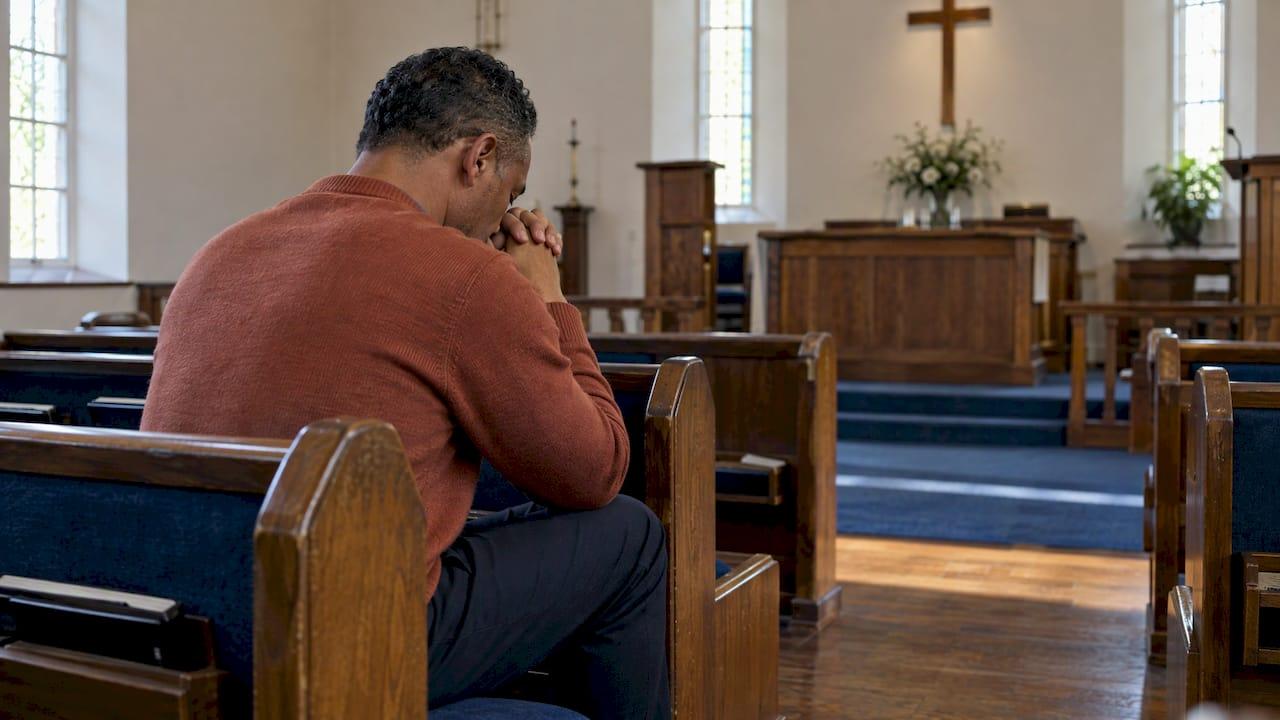
A Christian leadership rhythm is a repeating pattern of work and rest, engagement and retreat, speech and silence that keeps you steady for the long haul. It is not a productivity system. It is the way you cooperate with the pattern God built into creation, so that your calling does not quietly consume you. Below you will find the biblical footing, the research, a daily and weekly template, a plan for busy seasons, and the warning signs that say it is time to reset.
TL;DR
- Christian leadership rhythms are recurring patterns of work and rest, engagement and retreat, silence and speech, rooted in creation and the Sabbath command.
- Research links Sabbath-keeping with lower burnout and greater personal accomplishment at work, so rest is part of how you lead well.
- Start small: a short morning with Scripture and prayer, a protected weekly day of rest, and a quarterly review of what is working.
- In busy seasons, shrink your practices to a sustainable minimum instead of dropping them.
- Rhythms hold best when another man knows what you have committed to and asks you about it.
Table of Contents
- What leadership rhythms are, and why they matter
- What the research says about rest and burnout
- A daily rhythm you can actually keep
- A weekly rhythm: Sabbath for people who run things
- Protect the rhythm in busy seasons
- Signs your rhythm is breaking down
- Rhythms that last need other men
- Our perspective
- Build your rhythm with men who will ask about it
- FAQ
- Sources
What leadership rhythms are, and why they matter
Most business owners already live by a rhythm. It is just not a chosen one. It is set by the inbox, the payroll date, the biggest client and the loudest fear. The question is whether the rhythm serves your calling or whether your calling is being run by it.
Ruth Haley Barton, writing in Christianity Today, describes sacred rhythms as patterns that hold together work and rest, engagement and retreat, silence and speech, action and stillness. She argues they curb compulsive busyness and help leaders last over the long term. That last phrase is the point. Anyone can sprint for a quarter. A rhythm is what lets you be the same man at sixty that you hope to be at forty.
The pattern is older than any leadership book. In the Exodus account, God's people are told to remember the Sabbath and to labor six days before resting on the seventh, a foundation the Lewis Center for Church Leadership summarizes for modern leaders. Creation itself runs on evening and morning, work and rest. You were made for it.
What the research says about rest and burnout
Faith language about rest is easy to nod along with and ignore. Some data makes it harder to wave off.
A 2022 study of 1,309 Christian-school teachers across four countries, including the United States, found that Sabbath-keeping had a statistically significant inverse relationship with burnout. Sabbath keepers showed burnout levels 40 to 49 percent of a standard deviation lower. These were teachers, not CEOs, so treat it as a strong signal rather than a guarantee for your situation.

A Duke evaluation of its Sabbath Living Study found that increasing Sabbath-keeping was related to greater personal accomplishment at work, while decreasing it was related to worse anxiety and lower spiritual well-being among clergy. The study had no control group, so it shows an association and does not prove cause. Still, the direction matches what Scripture has said for thousands of years.
One more finding matters if you employ people. A Seattle Pacific University paper on biblical rhythm and rest argues that burnout comes from the interaction between individuals and organizational context. Its authors recommend building rest, reflection and relationship into workplace culture. They also warn that personal wellness does not inoculate anyone against a toxic pace. Your own habits are the start. The culture you set is the rest of the job.
A daily rhythm you can actually keep
A daily rhythm does not need to be impressive. It needs to survive a Tuesday.
Begin with God before the day begins with you
Jesus is the model here. Scripture shows him withdrawing to pray early in the morning (Mark 1:35) and spending a night in prayer before choosing his twelve (Luke 6:12 to 13). Solitude came first. Decisions and action followed.

One ministry example from Influence Magazine gives the first 90 minutes of the day to Bible reading, prayer and a walk, keeps evenings for alternating family and ministry commitments, and protects Saturday as sacred space. You may not have 90 minutes. Many of the men we talk with do not. If you have ten, start with ten.
A workable minimum looks like this:
- Morning: read a short passage and pray before you open email or your phone.
- Midday: stop for one minute. Breathe, pray, and ask what the afternoon actually requires of you.
- Close of work: say a brief prayer handing the day back to God, so you walk into your home present rather than still at the office.
If prayer feels like another task on the list, our post on spiritual disciplines for entrepreneurs starts with one minute of prayer and builds from there.
Let silence do some of the work
Barton presents silence and solitude as a corrective to reactive or manipulative communication. In silence you notice your inner reaction before you act on it, and you can choose words grounded in love, trust and wisdom. Every owner knows the email written in anger and regretted by lunch. A few quiet minutes before a hard conversation is cheaper than the repair afterward.
A weekly rhythm: Sabbath for people who run things
The objection comes fast: "My business does not stop on Sundays." That is true, and it is the very reason to practice it. The Lewis Center frames Sabbath as an act of faith. Stopping work means relinquishing control and trusting God, rather than proving that every task depends on you.
Rest rarely happens by accident. Day 1 makes the simple point that planning rest makes Sabbath more likely. The Lewis Center suggests several practical moves that fit an owner or executive well:
- Manage your notifications so the phone is not a leash.
- Set realistic deadlines with your team, so Monday is not an ambush.
- Queue emails instead of sending them during time off.
- Encourage full disconnection during paid time off.
- Use an accountability partner to keep the commitment real.
The last point is where most plans fail. A Sabbath you keep alone is a Sabbath you can renegotiate every week. For a step-by-step version built around customers and deadlines, see our six-step Sabbath plan for business owners.
Lead your people into rest too
The Seattle Pacific paper points out what a Christian business leader should do with all this: model disconnection, set realistic deadlines, protect time off, and avoid messages that pressure others to work during rest periods. If you take Sunday off but text your team at 9 p.m. on Saturday, you have taught them what your rhythm really is.
Weekly planning is part of the rhythm
Rest is easier to protect when the other six days are planned honestly. A realistic time management guide can help you think about how a week gets shaped around the things that cannot be skipped. To go further with this, our post on protecting ten hours a week shows how to ring-fence time for family, faith and health. If you want a weekly question to anchor your planning, one question a week across five domains works well: personal, spiritual, relational, professional and financial.
Protect the rhythm in busy seasons
Every business has a season that eats everything: a launch, a funding round, a hard quarter, a death in the family. The temptation is to drop prayer, rest and exercise "just until this is over." Seasons like that tend to run longer than promised.
A better approach is to shrink instead of quit. Here is what that can look like:
| Practice | Normal season | Heavy season (minimum) |
|---|---|---|
| Scripture and prayer | 20 to 30 minutes each morning | One passage, one prayer, even if it is five minutes |
| Sabbath | Full day of rest | Half a day, with notifications off |
| Family time | Protected evenings | One non-negotiable meal together |
| Reflection | Weekly review | A short note at week's end: what did this season cost me? |
| Accountability | Weekly meeting | Weekly meeting, shorter, but never skipped |
The table is our own suggestion, not a prescription. The principle is the one to keep: a rhythm is not a rigid universal schedule. Review it every few months, ask what is life-giving and what is unrealistic, and adjust for the season you are in. A man with newborn twins and a man with an empty nest should not run the same plan.
When the pressure is the real problem, read how to stay steady under pressure as a Christian leader. If you are an executive in a new role, the 30 to 90 day playbook shows how to set your rhythm early, before the job sets it for you.
Signs your rhythm is breaking down
Unsustainable rhythms rarely announce themselves. They show up as small changes you explain away. The Christian Leadership Alliance's soul-care guidance lists persistent fatigue, reduced motivation, cynicism or numbness, withdrawal from community, loss of joy and moral failures as warning signs that need attention.
In plain terms, ask yourself:
- Is there tiredness that a good night of sleep does not fix?
- Have you stopped caring about the people you serve, or do you feel flat when good news arrives?
- Are you short with your wife and children, and quick to blame the pressure?
- Have your prayer and Scripture time faded without you deciding to let them go?
- Have you pulled back from your friends and church?
If several of these are true, take them seriously. If you are feeling hopeless or thinking of harming yourself, contact a doctor, a pastor or a licensed counselor today, or call or text 988, the Suicide and Crisis Lifeline in the United States.
How to reset
The same Christian Leadership Alliance guidance describes a recovery pattern in three movements: retreat from constant demands, restoration through prayer, rest, relationships and life-giving practices, and reemergence with renewed clarity and strength. Christianity Today's guide makes a similar case for balancing engagement with retreat, so a leader can gain perspective, re-strategize, tend to wounds and return with renewed energy.
Practically, that means:
- Name it honestly. Say "I am running on empty" out loud, to yourself and to God.
- Choose one lever. Pick one change you can keep: a consistent bedtime, a protected day off, no work after dinner.
- Tell someone who will ask. A trusted friend, pastor or mentor who will check in next week.
- Schedule a retreat. A half day away from your desk, with no agenda but listening.
If you are carrying heavy decisions while depleted, our guide on Christian CEO burnout explains why to pause the big calls while you recover, and how to keep your calling while you do.
Rhythms that last need other men
The Christian Leadership Alliance's self-stewardship guide encourages leaders to acknowledge their limits, spend intentional time in prayer and Bible study, listen to what the body is saying, and step away from manipulative pressures. Notice how many of those require honesty, and honesty requires someone to be honest with.
Proverbs says iron sharpens iron. Alone, a man's rhythm is only as strong as his mood on a given Thursday. With a few men who know your commitments and your calendar, it becomes a shared practice. If you want to see how that fits with the deeper principles, our overview of biblical leadership principles is a good next stop, and steward versus servant leadership helps when you are unsure what a season is asking of you.
Our perspective
We hear the same story from Christian business owners again and again. The business is growing, the faith is sincere, and the rhythm is gone. Prayer got squeezed out in the spring, Sabbath slid in the summer, and by fall the man is providing for everyone while quietly running on fumes. We call it the provider's prison, and the door is not locked from the outside.
What we have seen is that men rarely fix this with a better plan alone. They fix it when someone else is in the room. That is why every ISI Brotherhood member is placed in a Personal Board of Advisors: a small group of trusted Christian men who meet regularly and challenge, encourage and support one another across five areas of life: personal, spiritual, relational, professional and financial. Get the right men in the room, and the rhythm stops being a private resolution you can quietly drop.
Rhythm is also not a retreat from business. It is how a man stays fit for it. The sacred pause is not time lost. It is where you hear what God is asking of you before the next decision lands. Our weekly mastermind meetings give that pause a place on the calendar, and our year-round online community means you are not carrying a hard season alone.
If your rhythm has slipped, do not wait for a perfect month to restart it. Pick one practice, protect the rhythm, and tell a brother.
Derek
Build your rhythm with men who will ask about it
ISI Brotherhood is a Christian business mastermind for owners, entrepreneurs, executives and professionals. We offer two ways in. The ISI Community is $97 per month and gives you the year-round online community, events and resources for growth across personal, spiritual, relational, professional and financial life. The ISI Mastermind is $650 per month and places you in a small group that meets weekly as your Personal Board of Advisors.
Not sure which fits? Our guide to choosing a mastermind group walks through the difference, and the ISI Community application is the place to start. For a longer reset, our Deep Dive ONE THING Retreat gives you time to step back and focus.
FAQ
What are Christian leadership rhythms?
They are recurring patterns that balance work and rest, engagement and retreat, silence and speech, action and stillness. They are rooted in the creation account and the Sabbath command, and they help leaders avoid compulsive busyness and last over the long term.
How long should my daily time with God be?
Start with what you can keep, even ten minutes of Scripture and a short prayer. Consistency matters more than length. Add time only when the habit is steady, and shrink it, rather than drop it, when work gets heavy.
How can I keep a Sabbath when I own a business?
Plan it in advance and make it visible. Silence notifications, queue emails instead of sending them, set deadlines with your team that do not land on your day of rest, and ask a trusted friend to hold you to it. Frame it as trusting God with the business for a day.
How do I know my rhythm is unsustainable?
Look for fatigue sleep does not fix, loss of joy, cynicism or numbness, withdrawal from friends and church, and slipping spiritual practices. If several persist, make one concrete change and talk to a pastor, mentor or licensed counselor.
Do I need a group to keep these rhythms?
You can begin alone, but rhythms last longer when another man knows your commitments and asks about them. A small group of trusted Christian men gives you the accountability and honest conversation that willpower alone does not.
Sources
- Sacred Rhythms in the Life of the Leader, Christianity Today
- The Faith to Rest: Why Sabbath Matters for Leaders, Lewis Center for Church Leadership
- A Cross-Sectional Analysis of the Relationship Between Sabbath-Keeping and Burnout, PMC
- Changes in Sabbath-Keeping and Mental Health Over Time, Duke Clergy Health
- Implications of Biblical Principles of Rhythm and Rest, Seattle Pacific University
- Finding Balance and Rhythm in Ministry, Influence Magazine
- If You Get Tired, Learn to Rest, Not to Quit, Day 1
- Soul Care Multiplies, Christian Leadership Alliance
- Embracing Self-Stewardship, Christian Leadership Alliance